 Save
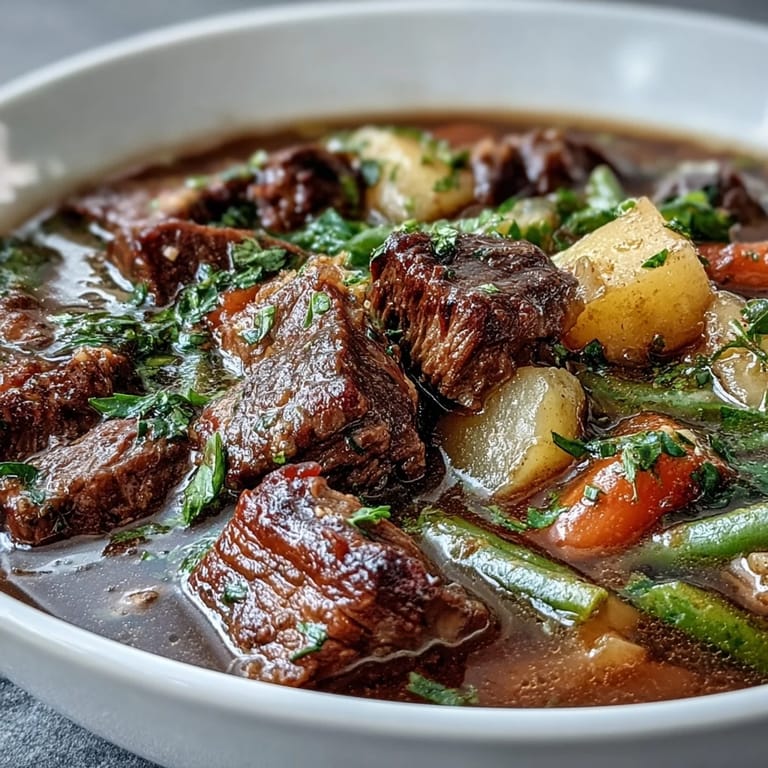
Save My neighbor showed up at my door one February evening with a thermos of beef and vegetable soup, steam still rising from the top, and I understood immediately why she'd been so secretive about her cooking all week. That first spoonful—tender beef practically dissolving on my tongue, carrots sweet and soft, a broth so rich it seemed impossible to make at home—changed how I thought about soup entirely. I pestered her for the recipe, made it that very weekend, and somehow ended up with something that tasted even better than hers, maybe because I'd learned the secret: patience and a good sear on the meat make all the difference.
I made this soup for my college roommate when she was going through a rough breakup, and she called me three days later asking for more—not because she wanted comfort food, but because she'd already finished the batch and was genuinely craving it. Watching someone find solace in something you made with your own hands is a feeling that sticks with you.
Ingredients
- Beef chuck (1.5 lbs, cut into 1-inch cubes): Chuck has just enough fat to stay tender during long cooking without becoming mushy, and cubing it yourself means you control the size for even cooking.
- Olive oil (2 tbsp): Enough to get the pot hot without drowning everything, and it helps those beef cubes develop that gorgeous brown crust.
- Onion, carrots, and celery (the holy trio): These three are called mirepoix in fancy cooking, but really they're just the flavor foundation that makes everything taste right.
- Garlic (3 cloves, minced): Never skip this step—garlic added after the vegetables have softened gives you a cleaner flavor that doesn't get lost in the long simmer.
- Potatoes and parsnip (optional): Potatoes thicken the broth naturally as they break down slightly, while parsnip adds an earthy sweetness that nobody can quite identify but everyone loves.
- Green beans and peas (frozen is fine): These go in at different times on purpose—green beans early enough to get tender, peas at the very end so they stay bright and don't turn to mush.
- Diced tomatoes (14.5 oz can, with juice): The acidity balances the richness of the beef broth and adds depth you'd need hours to develop any other way.
- Beef broth (8 cups): Use good broth if you can afford it; your soup will taste like you made stock from scratch, even though you didn't.
- Bay leaves, thyme, and oregano: These herbs do the heavy lifting flavor-wise, but the bay leaves especially need to come out before serving or they'll embarrass you by ending up in someone's spoon.
- Salt and pepper: Taste as you go, especially at the end—the broth concentrates as it simmers, so you might need less salt than you think.
- Fresh parsley (2 tbsp for garnish): A sprinkle of fresh herb on top makes it look like you spent all day on this, even if you didn't.
Tired of Takeout? 🥡
Get 10 meals you can make faster than delivery arrives. Seriously.
One email. No spam. Unsubscribe anytime.
Instructions
- Sear the beef until it's golden and confident:
- Heat oil in your pot over medium-high heat and let it shimmer before adding beef—you want to hear that sizzle. Brown the cubes on all sides for about five to seven minutes total, working in batches if needed so they actually sear instead of steam in a crowded pot.
- Build your flavor base with vegetables:
- Toss in diced onion, carrots, and celery into the same pot (don't wash it, those browned bits are liquid gold) and let them soften for about five minutes, then add minced garlic and cook for another minute until fragrant. You're creating the smell that will make people ask what's cooking.
- Reunite everything and add the broth:
- Return the beef to the pot and add potatoes, parsnip if using, green beans, tomatoes with their juice, broth, bay leaves, thyme, oregano, salt, and pepper. Stir it together so nothing sticks to the bottom, then bring it all to a boil.
- Let the magic happen with a low, slow simmer:
- Once it reaches a boil, reduce heat to low, cover the pot, and let it bubble gently for one hour and fifteen minutes, giving it an occasional stir. The beef will go from firm to fork-tender, and the broth will darken and deepen.
- Finish with peas and final seasoning:
- Add the frozen peas and cook uncovered for another ten to fifteen minutes—they'll pop open and release this bright, fresh note that somehow makes everything taste more alive. Taste it now and adjust salt and pepper because this is your only real chance to get it right.
- Serve with gratitude:
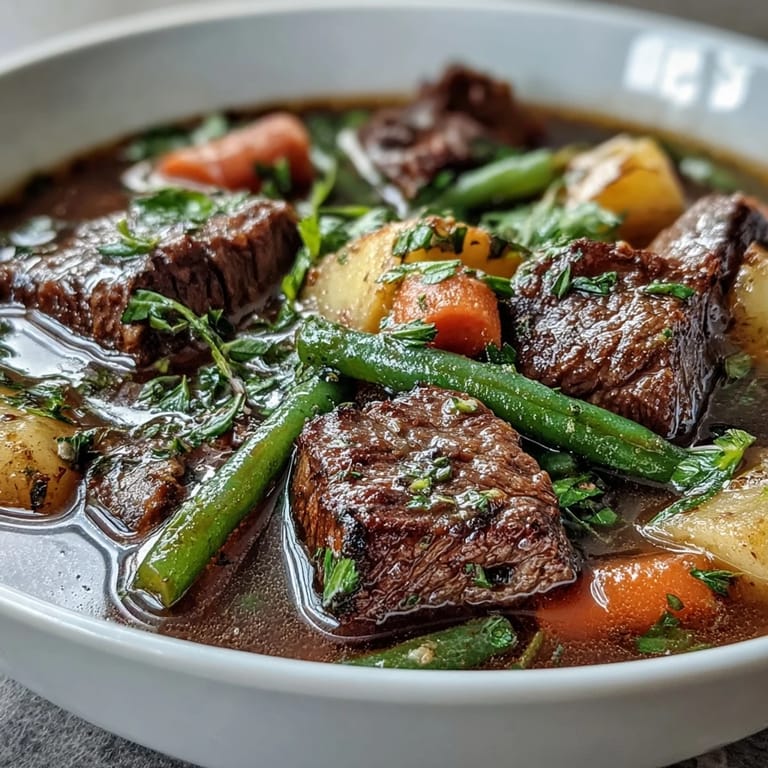
- Remove the bay leaves (seriously, find them), ladle soup into bowls, and top each one with a pinch of fresh parsley. Serve with bread if you're smart.
 Save
Save I realized this soup had truly become part of my cooking repertoire when my mom asked me for the recipe, made it once, and then started bringing it to church potlucks like it was her own creation—which felt like the highest compliment she could possibly give. Sometimes the best recipes are the ones that become so familiar you almost forget they ever felt like work.
Why This Soup Works Every Time
Beef and vegetable soup succeeds because it's built on timing and temperature rather than precision or fancy techniques. The long, gentle simmer breaks down tough meat fibers and coaxes sweetness from root vegetables in a way that quick cooking simply cannot replicate. Every element has a job—the tomatoes add acid and brightness, the herbs provide structure, the vegetables contribute both flavor and body—and together they create something greater than any single ingredient could be alone.
The Perfect Bread Pairing
Serve this soup with crusty bread that's been sliced thick and maybe rubbed with a little garlic if you're feeling fancy, though honestly just warm bread works fine too. The bread soaks up the broth and becomes this almost bread-soup hybrid that's somehow better than eating either one separately, and it's why people always ask for just one more bowl.
Storage and Scaling
This recipe makes enough for six generous servings, and it improves with time because the flavors continue marrying as it sits—so don't hesitate to make it ahead or even on a day when you have some time to spare. Refrigerated leftovers keep for up to four days, and you can freeze portions for up to three months if you want to keep some on hand for the inevitable moment when you need comfort food fast.
- Cool the soup completely before storing it, and use airtight containers so it doesn't absorb flavors from whatever else is in your fridge.
- If you're doubling this recipe, increase cooking time by about fifteen to twenty minutes since the larger batch takes longer to reach tender beef.
- Reheated soup sometimes needs a splash of extra broth because it thickens as it sits, so taste before you serve it again.
 Save
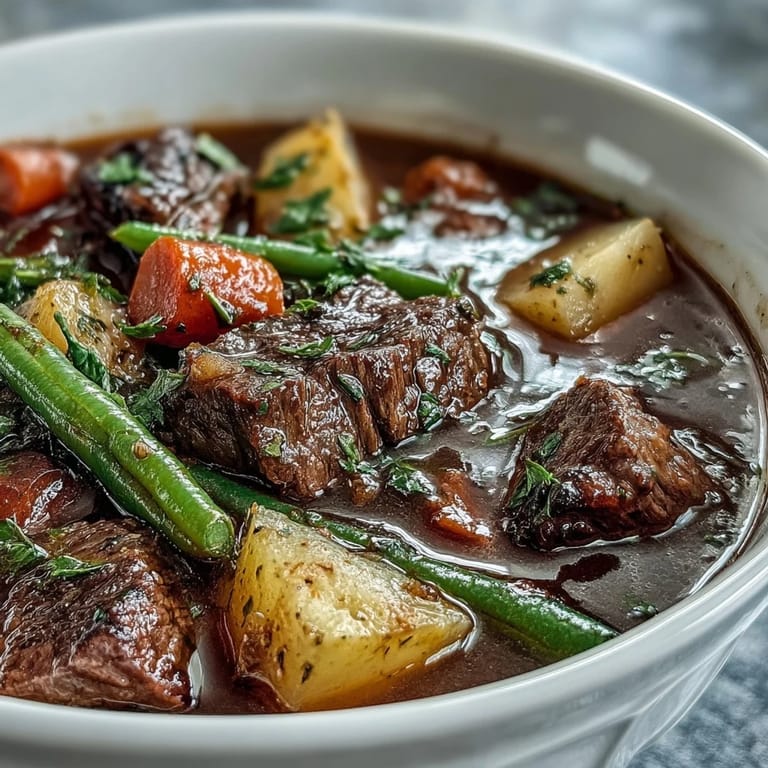
Save There's something quietly satisfying about a pot of soup simmering on the stove, about feeding people something warm and real and made with patience rather than shortcuts. This is the kind of recipe that becomes a friend.
Recipe FAQs
- → Can I use a different cut of beef?
Yes, beef stew meat or beef round work well. Choose cuts with some marbling for the most tender, flavorful results after long simmering.
- → How do I make the beef more tender?
Ensure you simmer the soup on low heat rather than boiling. The slow, gentle cooking breaks down the connective tissue in the beef chuck, making it fork-tender.
- → Can I add other vegetables?
Absolutely. Turnips, sweet potatoes, zucchini, or corn are excellent additions. Add heartier vegetables at the beginning and delicate ones near the end of cooking.
- → How should I store leftovers?
Store in an airtight container in the refrigerator for up to 4 days. The flavors meld beautifully overnight, making leftovers especially delicious.
- → Can I freeze this soup?
Yes, freeze in portion-sized containers for up to 3 months. Cool completely before freezing, and thaw overnight in the refrigerator before reheating gently on the stovetop.
- → What can I serve alongside this soup?
Crusty bread, dinner rolls, or cornbread complement the soup beautifully. A simple green salad also makes a nice side for a complete meal.