 Save
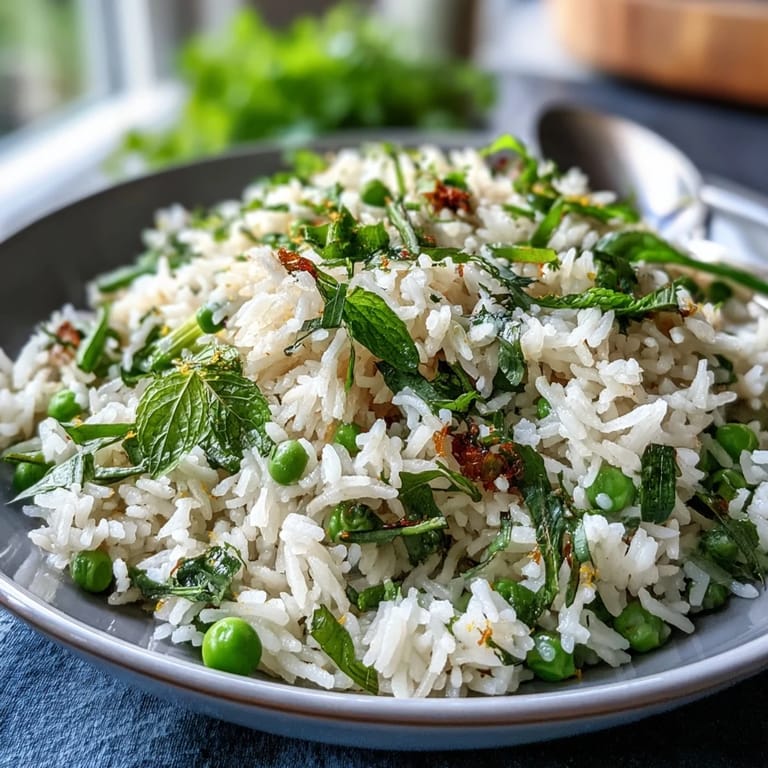
Save There's something about the first warm afternoon of spring that makes you want to cook with your windows thrown open, and that's exactly when this pilaf found its way into my kitchen. My neighbor had dropped off a bundle of fresh mint from her garden, still wet with morning dew, and I had a package of peas thawing on the counter. The combination felt inevitable, like the season itself was suggesting what to make. Within minutes, the whole house smelled like butter and garlic and something green and alive, and I knew this would become one of those dishes I'd make again and again.
I made this for Easter dinner last year, paired it alongside a honey-glazed ham, and watched my usually quiet father actually ask for seconds. He's not one for vegetables, but something about the sweetness of the peas and the subtle lemon brightness disarmed him completely. My mom leaned over and whispered that it was the best rice dish I'd ever made, and honestly, that moment made the whole meal feel less like cooking and more like creating something that mattered.
Ingredients
- Long-grain white rice (1 cup): Basmati or jasmine rice work beautifully here because they stay separate and delicate, never mushy or clumpy.
- Low-sodium vegetable broth (2 cups): The broth is your foundation, so choose one with clean flavor—it's worth spending a bit more on quality.
- Fresh or frozen spring peas (1 cup): Frozen peas are genuinely excellent in this dish and sometimes fresher than fresh, so don't hesitate to use them straight from the freezer.
- Yellow onion (1 small, finely chopped): The onion dissolves into the rice during cooking, creating a gentle sweetness that balances the mint.
- Unsalted butter (2 tablespoons): Butter carries flavor better than oil alone, though you can blend them if you prefer a lighter touch.
- Garlic (2 cloves, minced): Mince it fine so it distributes evenly and doesn't create bitter pockets when toasted.
- Fresh mint leaves (1/2 cup, finely chopped): This is the soul of the dish, so use real mint, not dried, and add it only after cooking.
- Fresh flat-leaf parsley (2 tablespoons, optional): Parsley adds earthiness and a slight color contrast if you want extra visual interest.
- Lemon zest (1 teaspoon): The zest is where the real lemon flavor hides, much more delicate than juice.
- Salt and black pepper (1/2 teaspoon and 1/4 teaspoon): Taste as you go because the broth brings its own sodium, and you might not need the full amount.
- Lemon wedges (for serving, optional): They're optional but they give people a choice in how bright they want each bite.
Tired of Takeout? 🥡
Get 10 meals you can make faster than delivery arrives. Seriously.
One email. No spam. Unsubscribe anytime.
Instructions
- Rinse the rice until the water runs clear:
- Hold the rice in a fine mesh strainer under cold running water and gently rub the grains between your fingers. You'll feel the starch wash away, and when the water finally runs clear instead of milky, you're done. This step prevents the rice from becoming gluey.
- Melt butter and soften the onion:
- Medium heat is your friend here—you want the onion to turn translucent and tender, not brown and crispy. Listen for a gentle sizzle, and you'll know the temperature is right.
- Toast the garlic briefly:
- Just 30 seconds, maybe even less. The moment you smell that sweet, toasted garlic aroma, move on to the rice. Any longer and it turns bitter.
- Coat the rice in butter and aromatics:
- Stir for about a minute so each grain gets coated. You'll notice the rice grains become slightly translucent at the edges, which means they're ready for the broth.
- Add broth and bring to a boil:
- Pour in the liquid and season with salt and pepper, then let it come to a rolling boil. This usually takes 2 to 3 minutes.
- Lower heat and cover to simmer:
- Drop the heat to low, put the lid on, and set a quiet timer for 15 minutes. Resist the urge to peek—steam is doing the work for you.
- Stir in peas and cook 5 more minutes:
- Whether frozen or fresh, the peas need just 5 minutes more to warm through and blend with the rice. The frozen ones actually stay a bit brighter and firmer.
- Let the rice rest covered:
- Five minutes of rest allows any remaining moisture to redistribute evenly, and the rice becomes fluffier as it cools slightly.
- Fluff and fold in the mint:
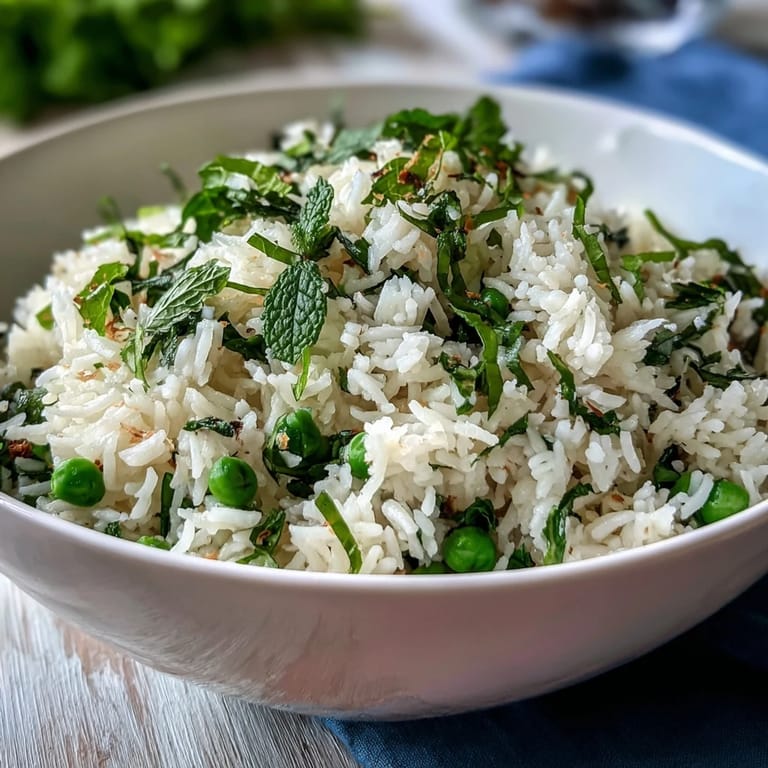
- Use a fork to gently separate the grains, then fold in the mint, parsley if using, and lemon zest. The warmth of the rice will release the mint's essential oils without destroying its fresh character.
- Taste and adjust seasoning:
- Always taste before serving. You might find you want more lemon zest or a crack more pepper, and that's exactly what this step is for.
 Save
Save My daughter, who usually pushes vegetables around her plate with the determination of someone on a hunger strike, asked me to make this pilaf specifically for her lunch the next day. She carried it in a container to school, and her friend asked what smelled so good. That's when I realized this dish had crossed over from being just something I made into something that had actual meaning in our household—it was suddenly requested, anticipated, missed when it wasn't on the menu.
Why Fresh Herbs Matter in This Dish
There's a difference between a rice pilaf that tastes good and one that tastes alive, and most of that difference comes down to herbs added at the end. Fresh mint has volatile oils that evaporate easily, so when you cook it into the rice from the beginning, you lose the brightness that makes the whole dish special. By stirring it in after the rice is done, you're essentially making a promise that every bite will taste like spring, not like the memory of spring. The mint should taste bright enough that you notice it immediately, almost shocking against the warmth of the rice.
Making This Ahead and Reheating
Life isn't always about cooking something fresh right before dinner, and this pilaf understands that. I've made it in the morning and reheated it gently in a saucepan with a splash of broth, and it comes back to life almost as though it were freshly made. The key is not using the microwave, which seems to dry it out and make the rice a bit rubbery, but instead using low heat on the stovetop and covering it with a lid. Add the mint after reheating, though, so it stays bright and doesn't get tired sitting around.
Variations and Substitutions to Consider
This pilaf is actually more flexible than it might seem, and playing with it has always led somewhere interesting. I've added scallions for a sharper onion note, stirred in toasted pine nuts for texture, even swapped half the butter for a good olive oil when I wanted something lighter. One evening I was out of fresh mint but had basil on hand, and I'll admit the result was different but equally delicious in its own way. The foundation is sturdy enough to handle gentle variations, which is another reason this recipe has become such a reliable favorite.
- Try swapping parsley for basil or dill if you want to explore different herbal directions.
- A handful of toasted walnuts or pine nuts adds a subtle crunch and earthiness.
- For extra richness, finish the dish with a knob of cold butter stirred in right before serving.
 Save
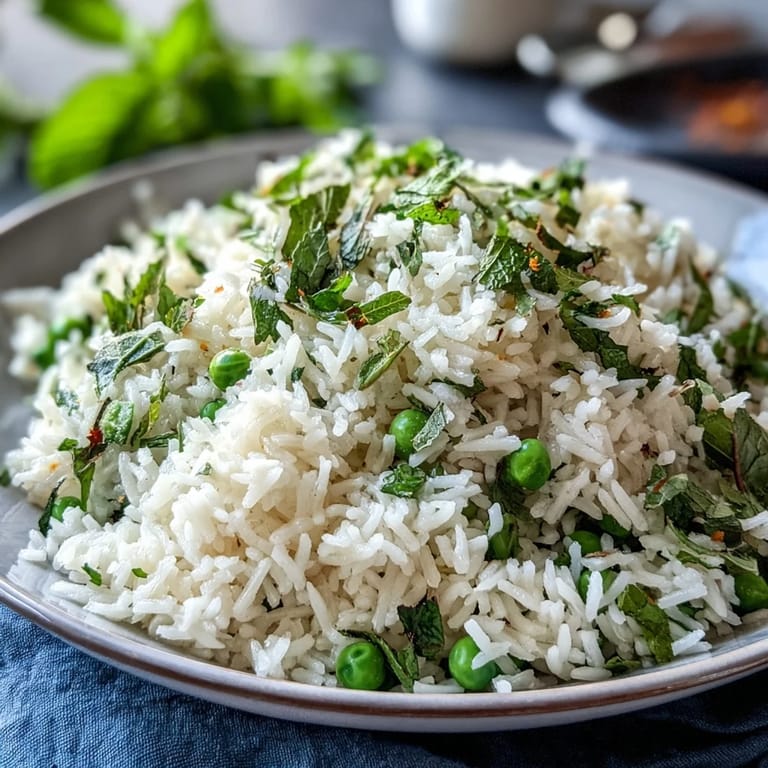
Save This pilaf isn't complicated, but it has a way of making ordinary dinners feel a little more thoughtful, a little more intentional. Once you make it a few times, it becomes one of those dishes that lives in your hands and your instincts, ready whenever you need something that tastes like care.
Recipe FAQs
- → What type of rice works best in this dish?
Long-grain varieties like basmati or jasmine provide a fluffy texture and absorb flavors well for this pilaf.
- → Can frozen peas be used instead of fresh?
Yes, frozen peas can be added directly from the freezer during cooking without thawing.
- → How does mint influence the flavor profile?
Fresh mint adds a bright, refreshing aroma and subtle herbal notes that lighten the dish.
- → Is there a way to make this dish dairy-free?
Substituting butter with plant-based alternatives or olive oil keeps richness while avoiding dairy.
- → What are good garnishes to enhance presentation and taste?
Lemon wedges add a zesty finish, and fresh parsley provides additional color and mild herbal flavor.