 Save
Save One weeknight, I found myself staring at a pound of ground beef and a jar of gochujang that had been sitting in my fridge for weeks, practically begging to be used. My partner mentioned craving something Korean but didn't want anything complicated, so I threw together this bowl in the time it took to brew a cup of tea. The beef hit the pan with this satisfying sizzle, the sauce came together in minutes, and suddenly our kitchen smelled like a Seoul street food stall—that perfect balance of savory, spicy, and sweet that makes you want to eat standing up at the counter.
I made this for my sister on a random Tuesday when she called saying she was tired and hungry, and I wanted to prove that restaurant-quality food doesn't require hours in the kitchen. Watching her eyes light up when she tasted it—that moment when someone realizes good food can happen fast—that's when I knew this recipe was a keeper. She's made it three times since then, which says everything.
Ingredients
- Ground beef (1 lb): Use lean beef so the sauce clings to the meat instead of pooling in grease—I learned this the messy way.
- Gochujang (2 tablespoons): This Korean chili paste is the backbone; it brings heat, umami, and a slightly fermented complexity that you can't fake with sriracha alone.
- Low-sodium soy sauce or tamari (3 tablespoons): Tamari keeps it gluten-free without tasting watered down, which matters if you're sensitive to that.
- Brown sugar (2 tablespoons): It balances the heat and salt with a gentle sweetness that rounds out the whole sauce.
- Sesame oil (1 tablespoon): Start with just one tablespoon—it's potent and the aroma is unmistakable once it hits the hot pan.
- Garlic and ginger (2 cloves and 1 teaspoon): Fresh is non-negotiable here; jarred versions fade into the background of this bold sauce.
- Rice vinegar (1 tablespoon): This adds brightness and cuts through the richness so the sauce feels alive on your tongue.
- Black pepper (1/2 teaspoon): A small touch that adds depth without making things spicy.
- Cooked rice or cauliflower rice (4 cups): This is your canvas; pick whatever fits your mood or dietary goals, and the bowl adjusts beautifully.
- Fresh cucumber, carrot, green onions, and sesame seeds: These toppings aren't just decoration—they provide texture and freshness that contrast the warm, savory beef.
Tired of Takeout? 🥡
Get 10 meals you can make faster than delivery arrives. Seriously.
One email. No spam. Unsubscribe anytime.
Instructions
- Get the skillet singing:
- Heat a large skillet over medium-high heat and add the sesame oil. When it shimmers and releases that toasty aroma, you'll know it's ready—this is when you add the ground beef. Breaking up the meat as it cooks for 4 to 5 minutes ensures it browns evenly and develops those little flavorful bits.
- Wake up the aromatics:
- Toss in the minced garlic and grated ginger, stirring for about a minute until the kitchen smells incredible. This brief toast mellows their intensity and lets them meld into the sauce rather than bite through it.
- Build the sauce:
- Stir in the gochujang, soy sauce, brown sugar, rice vinegar, and black pepper all at once, mixing everything until the beef is coated and the sauce begins to thicken, which takes 2 to 3 minutes. You'll see it go from loose and glossy to silky and clinging, which is exactly what you want.
- Taste and adjust:
- This is your moment to dial in the flavors—add more gochujang if you want heat, more brown sugar if it's too sharp, or a splash more vinegar if it feels heavy. Trust your palate; every stovetop is different and so are preferences.
- Bring it together:
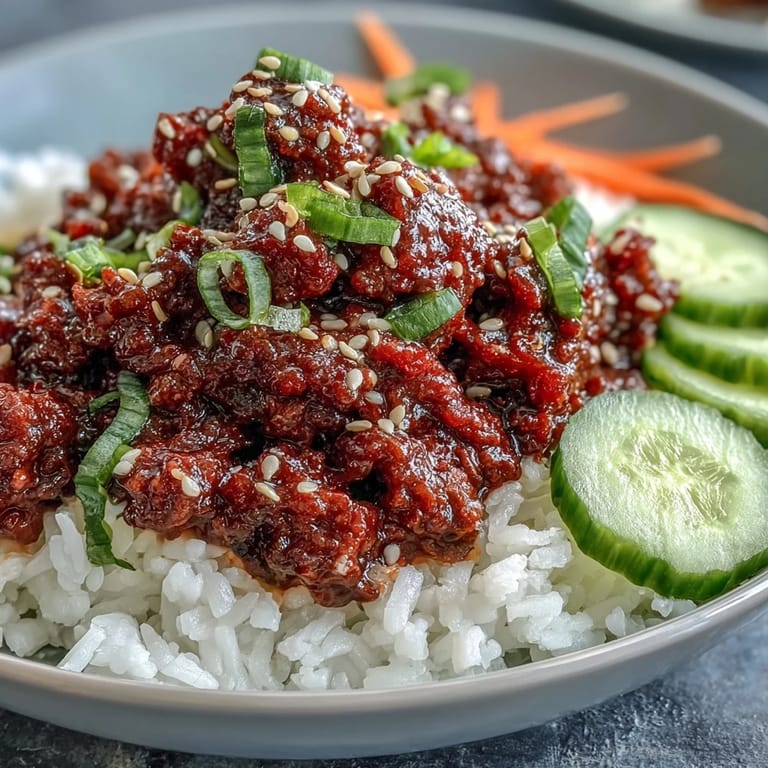
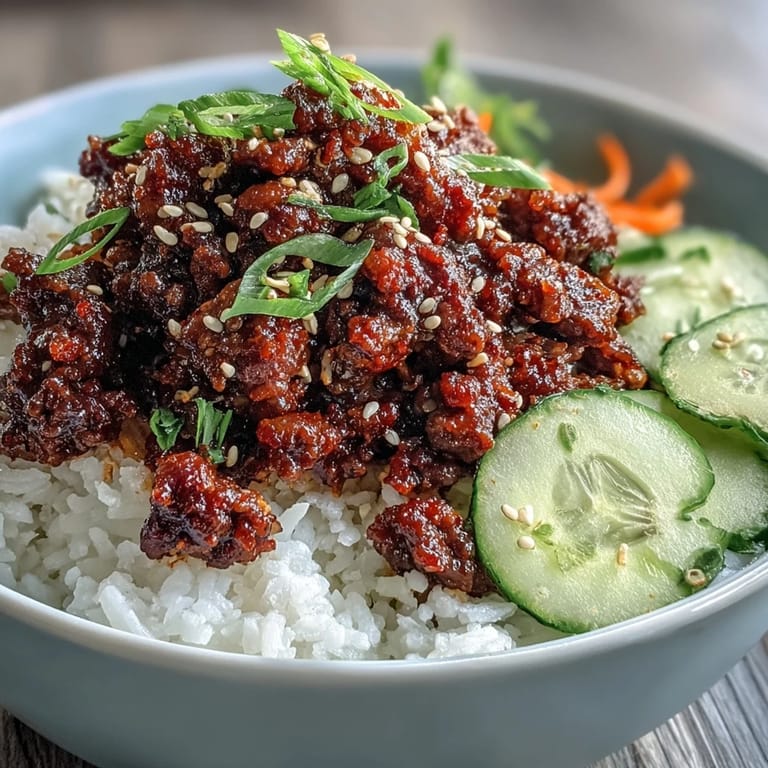
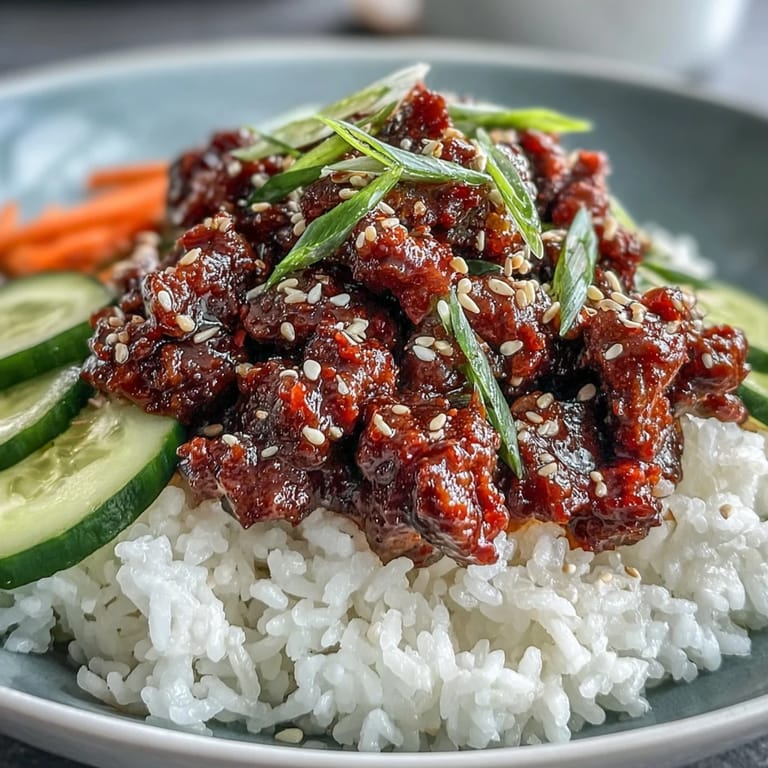
- Divide your rice or cauliflower rice into bowls, spoon the warm beef and sauce generously on top, then scatter the fresh toppings across—cucumber, carrot, green onions, and those toasted sesame seeds. Serve immediately while everything is warm and the vegetables are still crisp.
 Save
Save There's something deeply satisfying about assembling these bowls—the ritual of arranging toppings, the contrast of temperatures and textures, the way everyone eats their own way by choosing what ratios feel right to them. It stops being just dinner and becomes a moment where people slow down and actually taste what's in front of them.
Playing with Heat and Spice
When I first made this, I was timid with the gochujang, worried about making it too spicy for people with sensitive palates. That was a mistake—the sauce is bold but not cruel, and it leaves room for individual adjustment. If someone wants more heat, a drizzle of sriracha or a few slices of fresh red chili on top lets them own that decision, which is actually more fun than serving it one fixed way.
Choosing Your Base Wisely
The choice between regular rice and cauliflower rice changes the whole experience, and I've discovered that both are right depending on the day. Regular rice soaks up that sauce like a dream and makes the bowl feel comforting and complete; cauliflower rice keeps things light and lets the beef and toppings shine without the heaviness. Neither is better, just different.
Make It Your Own
I've made this bowl with ground turkey, with shredded chicken, with just mushrooms for friends who don't eat beef, and every version sings because the sauce carries so much flavor. The architecture is simple enough that you can swap proteins or add vegetables without losing what makes it special.
- Try adding a handful of spinach or zucchini to the skillet while the beef is cooking—they wilt right in and become part of the sauce.
- A fried egg on top transforms the bowl into something richer, and the yolk mixes into the sauce like liquid gold.
- Keep a small bowl of extra gochujang on the table for people who want to push the spice level higher without affecting everyone's dish.
 Save
Save This bowl has become the recipe I make when I want to feel confident in the kitchen but don't want to spend hours there. Every time, it reminds me that good food doesn't have to be complicated—it just needs quality ingredients, a little heat, and a moment of genuine attention.
Recipe FAQs
- → What is gochujang?
Gochujang is a Korean fermented chili paste that provides a sweet, savory, and spicy flavor. It's a staple in Korean cooking and can be found in Asian markets or the international aisle of most grocery stores.
- → Can I make this dish spicier?
Absolutely. Increase the amount of gochujang, add sliced fresh chili peppers, or drizzle sriracha over the finished bowl. You can also include red pepper flakes during cooking for additional heat.
- → What proteins work as substitutes?
Ground turkey or chicken make excellent lighter alternatives. Both absorb the gochujang sauce beautifully and cook in the same amount of time. For a vegetarian version, use crumbled tofu or plant-based ground meat.
- → Is this suitable for meal prep?
Yes, the beef mixture stores well in the refrigerator for 3-4 days. Keep the rice and toppings separate until serving to maintain texture. Reheat the beef gently in a skillet or microwave.
- → How do I make it gluten-free?
Use tamari instead of soy sauce and ensure your gochujang brand is certified gluten-free, as some varieties contain wheat. The cauliflower rice option also reduces carbohydrates significantly.
- → What other toppings work well?
Fresh options include shredded cabbage, bean sprouts, sliced radishes, or avocado. Pickled vegetables add tang, while a fried egg on top creates a rich, creamy element. Kimchi is the traditional addition.