 Save
Save My coworker brought a Korean beef bowl to lunch one Tuesday and spent the next twenty minutes describing how she'd assembled it in under thirty minutes flat. I watched her eat with such obvious satisfaction that I immediately asked for the recipe, and when she explained the gochujang-beef combination, I understood why. That evening, I stood in my kitchen with ground beef sizzling in a skillet, the smell of sesame oil and garlic filling the air, and realized this wasn't just dinner—it was the kind of meal that tastes restaurant-quality but feels completely doable on a weeknight.
I made this for a small dinner with friends who were all craving something different, something that wasn't the usual pasta or chicken routine. When I set those bowls down and everyone immediately reached for their spoons without hesitation, commenting on the color and aroma, I knew this recipe had staying power. It became the dish I'd make whenever I wanted to impress without breaking a sweat, and now my friends actually request it by name.
Ingredients
- Lean ground beef (1 lb): The foundation of this bowl, and using lean beef keeps things from getting greasy while still delivering that rich, savory backbone.
- Gochujang (2 tbsp): This Korean chili paste is the soul of the dish—it brings heat, depth, and a slight sweetness that transforms ground beef into something memorable.
- Soy sauce (2 tbsp): Adds umami and saltiness that pulls all the flavors together; tamari works if you need gluten-free.
- Brown sugar (1 tbsp): A touch of sweetness that balances the heat and saltiness, creating a sauce that coats each bit of beef.
- Garlic and ginger (2 cloves and 1 tbsp minced): These two are essential—they create an aromatic base that makes the kitchen smell incredible and builds flavor from the very first minute.
- Toasted sesame oil (1 tbsp): Use this to sauté your aromatics; the toasted version has a deeper flavor than regular sesame oil.
- Green onions (2, thinly sliced): Fresh onions add brightness and a gentle bite that cuts through the richness of the beef.
- Short-grain rice (4 cups cooked): The canvas for your bowl; white or brown rice both work beautifully here.
- Edamame (1 cup, shelled and cooked): Brings a pop of color and mild, slightly nutty flavor that echoes the sesame notes.
- Cucumber (1 cup, thinly sliced): Cool and crisp, it provides a refreshing contrast to the warm, savory beef.
- Carrot (1 cup, julienned): Sweet and tender when raw, adding both visual interest and a subtle crunch.
- Kimchi (1 cup, chopped): The tangy, spicy kick that makes this bowl feel alive; it ties everything back to Korean cuisine.
- Toasted sesame seeds (2 tbsp): The finishing flourish—they add crunch and a toasted, nutty aroma that brings the whole bowl together.
Tired of Takeout? 🥡
Get 10 meals you can make faster than delivery arrives. Seriously.
One email. No spam. Unsubscribe anytime.
Instructions
- Start with warmth and fragrance:
- Heat your large skillet over medium heat and add the toasted sesame oil. Once it shimmers, add your minced garlic and ginger and let them cook for about a minute—you'll know it's ready when the kitchen starts smelling impossibly good and the garlic just begins to soften.
- Brown the beef properly:
- Add your ground beef to the hot skillet and use a wooden spoon or spatula to break it apart as it cooks, stirring occasionally so it browns evenly rather than clumping. After five to six minutes, you want no pink remaining and the beef to have taken on a light golden color in spots.
- Build the sauce:
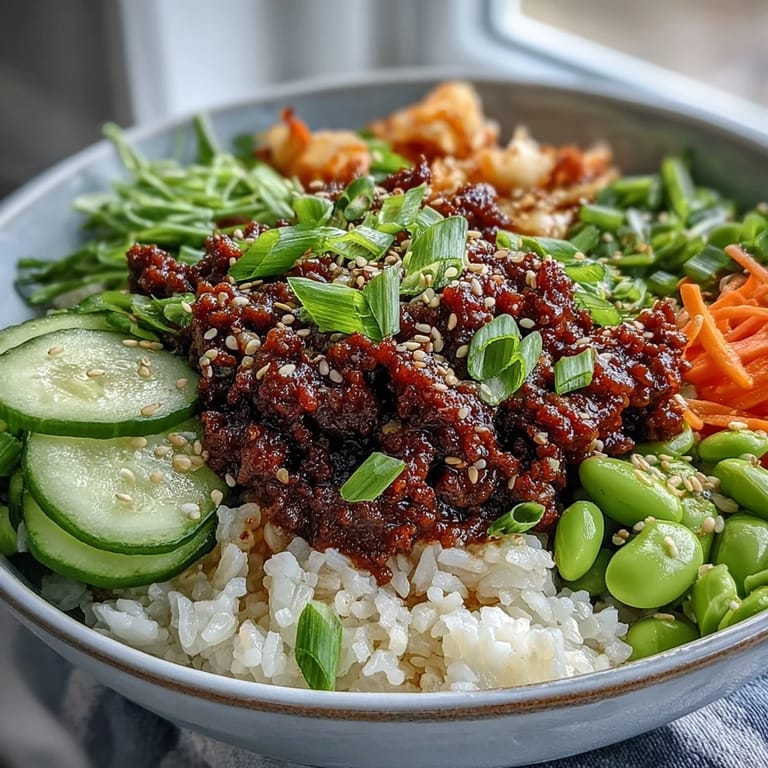
- Once your beef is cooked through, stir in the gochujang, soy sauce, and brown sugar, mixing well so the paste incorporates fully. Let this simmer for two to three minutes, stirring gently, until the sauce thickens slightly and coats each piece of beef with a glossy, deep red coating.
- Finish with fresh elements:
- Remove from heat and stir in half of your sliced green onions, tasting as you go to see if you'd like a touch more heat or saltiness.
- Assemble with intention:
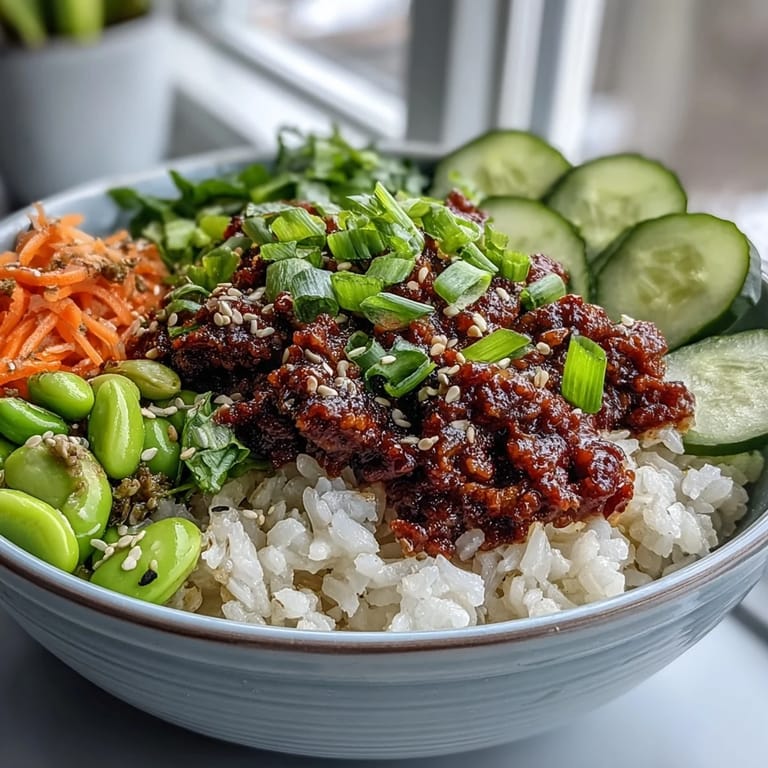
- Divide your warm rice among four bowls, creating a gentle base. Top each bowl with the beef mixture, then arrange your edamame, cucumber, and carrot around the rice—think of it as creating a little landscape of flavors and textures.
- Finish and serve:
- Sprinkle the remaining green onions across the top, then a generous handful of toasted sesame seeds, and bring to the table immediately while everything is still warm.
 Save
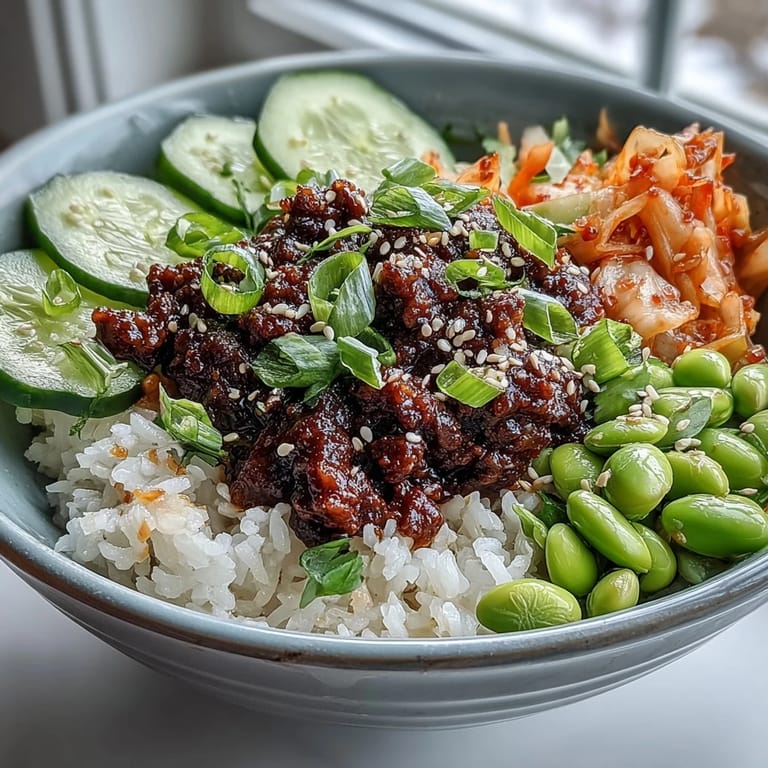
Save There's a moment while assembling these bowls when everything aligns—the steam rising from the rice, the vibrant colors of the vegetables, the beef glistening with its glossy sauce—and you realize you've created something both nourishing and deeply satisfying. It's the kind of meal that makes you feel like you've done something right, even if you threw it together on a random Tuesday evening.
Customizing Your Bowl
The beauty of this bowl is that it adapts beautifully to what you have on hand or what you're craving. Ground turkey or chicken cook in the exact same timeframe as beef and absorb the gochujang sauce just as wonderfully, creating something lighter if that's what you need. For a vegetarian version, crumbled tofu or plant-based ground meat works surprisingly well, though you might add a splash more soy sauce to compensate for the lost meatiness. I've even added a fried egg on top on mornings when I had leftover beef and rice, and that extra richness transformed the bowl into something almost decadent for breakfast.
Building Layers of Flavor and Texture
What makes this bowl feel so complete is the deliberate interplay between different temperatures, textures, and tastes. The warm beef and rice form the grounding base, while the raw vegetables stay cool and crisp, refusing to surrender their crunch even as you mix everything together. The kimchi adds a necessary sour, funky note that brightens everything, while the sesame seeds contribute a toasted, almost nutty undertone that echoes back to the sesame oil used in cooking. Each component could stand alone, but together they create something with far more dimension than the sum of its parts.
Storage and Make-Ahead Tips
You can absolutely prep components in advance, which makes this bowl an excellent choice for meal-prepping or feeding a crowd. The beef sauce keeps beautifully in the refrigerator for three days and actually tastes even better reheated, as the flavors have time to deepen and meld. I prefer to keep the rice and vegetables separate until assembly, since the raw vegetables stay crisper that way and the rice won't absorb excess moisture from the kimchi.
- Cook your beef the night before and reheat gently in a skillet with a splash of water before serving.
- Prep all your vegetables ahead of time and store them in sealed containers so you're ready to assemble in minutes.
- If you must store a complete bowl, eat it within a day and keep it in an airtight container to minimize any sogginess.
 Save
Save This bowl has become my go-to when I want to feel like I've cooked something impressive without spending hours in the kitchen. It's the kind of recipe that reminds you why you started cooking in the first place—pure satisfaction in a bowl.
Recipe FAQs
- → What does gochujang taste like?
Gochujang is a Korean fermented chili paste with a complex flavor profile combining spicy, sweet, and savory notes. It has a deep umami taste from fermentation, mild heat, and slight sweetness from glutinous rice. The paste adds rich depth and characteristic Korean flavor to the beef.
- → Can I make this bowl ahead of time?
The ground beef mixture reheats beautifully and can be made up to 3 days in advance. Store beef and vegetables separately in airtight containers in the refrigerator. When ready to serve, reheat the beef with a splash of water to prevent drying, then assemble bowls with freshly warmed rice and toppings.
- → Is this dish very spicy?
The spice level is moderate and adjustable. Gochujang provides mild to medium heat depending on the brand and amount used. For less spice, reduce gochujang to 1 tablespoon. For more heat, add additional paste or serve with Korean chili flakes. Fresh vegetables help balance the warmth.
- → What protein alternatives work well?
Ground turkey, chicken, or pork make excellent lighter alternatives. For a vegetarian version, use plant-based crumbles or extra-firm tofu crumbled and browned well. Adjust cooking time slightly as turkey and chicken may cook faster than beef while tofu needs less time.
- → What other toppings can I add?
Fried eggs with runny yolks add richness when broken over the bowl. Shredded cabbage, radish slices, bean sprouts, or spinach provide extra crunch and nutrition. Sliced avocado offers creaminess to balance the spicy beef. Pickled vegetables or fresh herbs like cilantro or basil work wonderfully too.
- → Is gluten-free tamari a good substitute?
Yes, tamari or coconut aminos are excellent gluten-free substitutes for soy sauce. Tamari provides similar depth and saltiness while coconut aminos are slightly sweeter with less sodium. Both work well in the gochujang sauce without compromising the authentic Korean flavors.