Save
Save My daughter came home from school one afternoon asking if I could pack something that looked as fun as it tasted, something colorful enough to make her friends curious about what was inside her lunchbox. That question stuck with me while I was standing in the kitchen chopping vegetables, and these rainbow wraps became our answer. They're simple to make, impossible to mess up, and honestly, they've become the lunch I make most often when we need something quick but special.
I packed these for a hiking trip last spring, and we sat on a sunny ridge unpacking them while the mountains sprawled out below us. My partner took one bite and immediately asked if I'd started a catering business, which made me laugh because the whole thing felt so effortless. That's when I realized these wraps hit that sweet spot where they feel indulgent and wholesome at the same time.
Ingredients
- Large whole wheat tortillas: These hold up better than thinner wraps and the nutty flavor actually complements the vegetables, not against them.
- Hummus: It acts as both a flavor builder and a light glue that keeps everything from sliding around as you eat, so don't skip spreading it all the way to the edges.
- Red and yellow bell peppers: The sweetness in these peppers balances the earthiness of the other vegetables, and they add genuine crunch that stays fresh even hours later.
- Carrot, julienned: Julienning instead of shredding gives you defined ribbons that look intentional and add textural interest.
- Cucumber: Cut it the same way as the carrot so every ingredient has a similar width and actually integrates with the others instead of competing.
- Purple cabbage: This is the surprise secret—it stays crisp longer than regular cabbage and adds a subtle peppery note that rounds everything out.
- Baby spinach: The tender leaves wilt slightly from the hummus warmth without turning into mush, and they add an invisible nutrition boost.
- Fresh parsley or cilantro: Just a handful, chopped fine, lifts the whole wrap from good to bright and fresh-tasting.
- Avocado and feta cheese: Both optional but honestly worth adding if you have them—the creaminess and saltiness make the wrap feel more substantial.
Tired of Takeout? 🥡
Get 10 meals you can make faster than delivery arrives. Seriously.
One email. No spam. Unsubscribe anytime.
Instructions
- Lay down your canvas:
- Place a tortilla flat on a clean cutting board or counter, and take a moment to check that it's not cracked or damaged. If it feels stiff or cold from the fridge, let it warm for thirty seconds on the counter.
- Spread the hummus:
- Dollop about a tablespoon onto the center and use a spoon or small spatula to spread it outward in a thin, even layer, stopping just shy of the edges so it doesn't squeeze out when you roll. The hummus should look like a pale backdrop for your vegetables, not thick or clumpy.
- Build your rainbow:
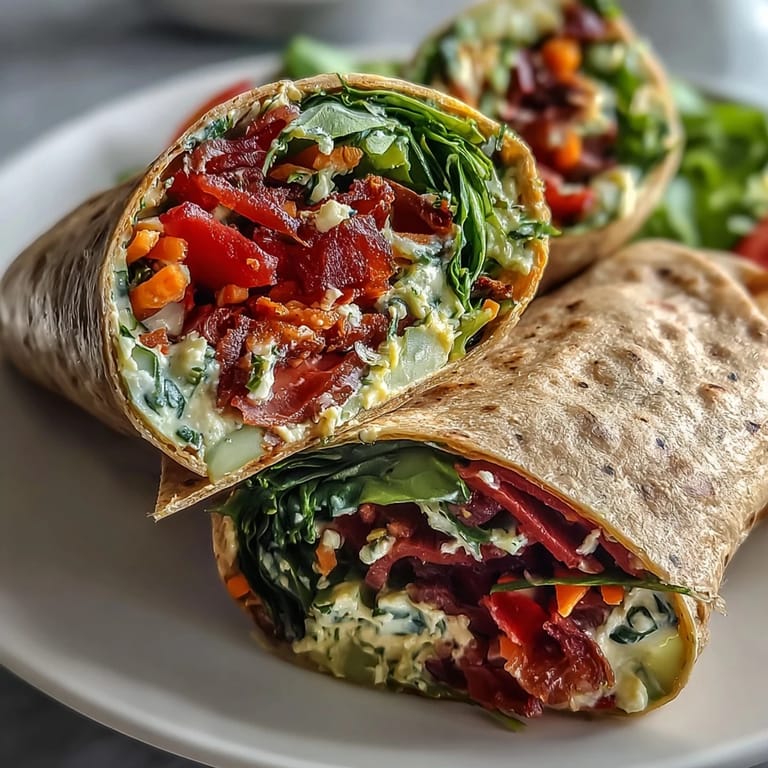
- Starting from one side, arrange your vegetable strips in horizontal rows so they create visible bands of color—red peppers, then yellow, then orange carrots, pale cucumber, purple cabbage, and deep green spinach. Think of it like painting rather than cooking, because the visual appeal is half the appeal.
- Add the finishing touches:
- Scatter your herbs over the middle, then add avocado slices and feta if you're using them. Don't overload it—remember that everything will compress slightly when you roll, so what looks like plenty is actually just right.
- Fold and roll with intention:
- Fold the left and right edges inward first, tucking them slightly under the filling so they'll hold everything in place. Then start rolling from the bottom edge toward you, using steady pressure but not so much that you squeeze the vegetables into mush.
- Slice and wrap for transport:
- Once rolled tight, slice each wrap in half diagonally with a sharp, confident motion—a serrated knife works better than you'd think for this. Wrap the halves individually in parchment paper or foil so they stay intact and look intentional when you unwrap them.
 Save
Save My son once told me these wraps were the thing that made him feel like he was choosing to eat healthy instead of being forced, which is maybe the highest compliment a parent can get. These days, when he asks what's for lunch, I can hear the hopeful tone in his voice, and I know exactly what he's hoping for.
The Vegetable Math That Actually Works
The reason these wraps work so well comes down to something simple: every vegetable brings something different to the table. The peppers give you sweetness and crunch, the cucumber adds water and coolness, the cabbage contributes a peppery bite that sneaks up on you, and the spinach softens just enough to bind everything together. When you think about it this way, you're not just piling vegetables into a tortilla, you're orchestrating flavors and textures that actually complement each other. The hummus ties all of this together with a creamy, tangy foundation that keeps each element from overwhelming the others.
Why Whole Wheat Matters Here
I used to make these with regular flour tortillas before someone pointed out that whole wheat actually tastes better with vegetables. The nuttiness in whole wheat doesn't fight the fresh, crisp flavors—it frames them, like a good frame makes a piece of art look more intentional. Plus, whole wheat tortillas have more structural integrity, so your wrap stays together through backpacks, car rides, and enthusiastic eating instead of falling apart halfway through.
Variations That Still Taste Like Home
The beautiful part about these wraps is how forgiving they are to variation and preference. I've made them with cream cheese instead of hummus when I was out of hummus, and they tasted completely different but still delicious—richer, slightly tangy, with the vegetables tasting brighter against that backdrop. Once, I added some grilled chicken and suddenly they became a main course instead of a lunch component, and another time I swapped in a cilantro-lime aioli I had leftover from something else, which transformed them into something unexpected and wonderful. The point is, these wraps are a framework you can build within, not a rule you have to follow exactly.
- Try swapping the hummus for mashed avocado, cream cheese, or even a tahini-lemon mixture for completely different flavor profiles.
- Add grilled or rotisserie chicken, crispy tofu, or hard-boiled eggs if you want them to be more filling and protein-rich.
- Use gluten-free tortillas without changing anything else, or switch to a spinach or tomato-flavored wrap for subtle flavor shifts.
 Save
Save These wraps have become the thing I make when I want to show someone I care without it feeling like a big production. Every time I pack one, I think about how something so simple can still feel thoughtful and nourishing.
Recipe FAQs
- → What vegetables are ideal for these wraps?
Thinly sliced bell peppers, shredded purple cabbage, carrots, cucumber, and baby spinach provide vibrant colors and varied textures.
- → Can I substitute the hummus spread?
Yes, cream cheese or a dairy-free spread work well and add creaminess without overpowering the veggies.
- → How do I keep the wraps from becoming soggy?
Spread hummus evenly to create a moisture barrier and wrap tightly in parchment or foil to maintain freshness.
- → Are there protein add-ons recommended?
Grilled chicken or tofu can be added for extra protein while keeping the wraps wholesome and balanced.
- → Can these wraps be made gluten-free?
Absolutely. Use gluten-free tortillas to accommodate gluten sensitivities without changing the overall flavor.