 Save
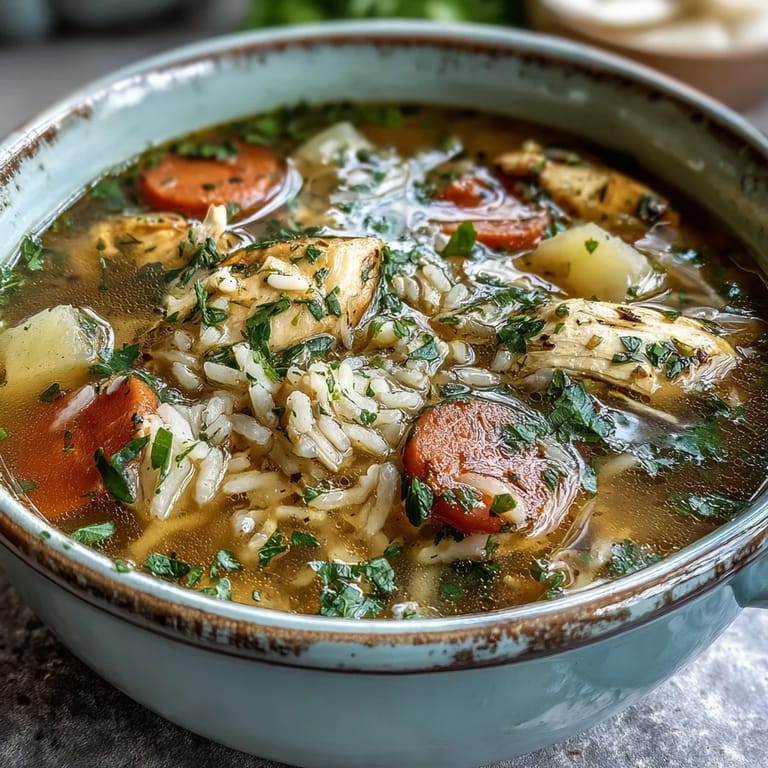
Save There's something about a one-pot soup that feels like permission to slow down. I discovered this chicken and rice combination on a Tuesday night when I had exactly three things going on at once, a fridge that needed clearing, and zero energy for cleanup. The moment the broth hit the pot and started bubbling around the vegetables, the whole kitchen smelled like home cooking, the kind that makes you forget you were ever in a hurry.
I made this for my mom on a cold Saturday afternoon, and she sat at the counter while I cooked, just talking and watching the vegetables soften in the pot. By the time I ladled it into bowls, the kitchen had fogged up with steam and she was already reaching for seconds. That's when I realized this soup does more than fill you up; it creates the moment where people want to linger a little longer.
Ingredients
- Boneless, skinless chicken breasts: Cut them into pieces roughly the size of your thumbnail so they cook evenly and are easy to eat straight from the spoon without needing a knife at the table.
- Onion, carrots, and celery: This trio is the backbone of any good broth-based soup, and together they create a natural sweetness that makes the whole pot taste more complex than it actually is.
- Garlic cloves: Minced fine so it distributes throughout the broth rather than leaving you with occasional harsh chunks.
- Long-grain white rice: Rinsing it first keeps the soup from turning cloudy, and it stays separated rather than turning mushy.
- Low-sodium chicken broth: This is where you have control over the salt level, which matters more than you'd think when everything's simmering together for 25 minutes.
- Olive oil or unsalted butter: Either works beautifully; butter gives you a richer starting base if that's your preference.
- Dried thyme and bay leaf: These two herbs are quiet workers that build flavor without announcing themselves loudly in every spoonful.
- Salt and black pepper: Taste as you go because different broths have different salt levels, and you might find you need less than the recipe suggests.
- Fresh parsley: Stirred in at the very end so it stays bright green and adds a fresh note that cuts through the richness.
- Lemon wedges: A squeeze at the table wakes up all the flavors and prevents the soup from tasting one-dimensional.
Tired of Takeout? 🥡
Get 10 meals you can make faster than delivery arrives. Seriously.
One email. No spam. Unsubscribe anytime.
Instructions
- Build your flavor base:
- Heat the oil in your pot over medium heat and add the onion, carrots, and celery, stirring every minute or so for about 5 minutes until the edges of the carrots soften and the onion turns translucent. You're looking for that moment when the vegetables release their sweetness into the fat.
- Wake up the garlic:
- Add your minced garlic and let it cook for just 1 minute, staying close enough that you can smell when it becomes fragrant without letting it burn. This is one of those steps that takes 60 seconds but teaches your palate something important about timing.
- Sear the chicken:
- Toss in the chicken pieces and cook for 2 to 3 minutes, stirring occasionally, until the outside develops a light golden color. They won't be cooked through, and that's exactly right because they'll finish cooking in the broth.
- Combine everything:
- Add the rinsed rice, broth, thyme, bay leaf, salt, and pepper all at once, stirring to make sure nothing sticks to the bottom. This is the moment when all your individual components become a unified whole.
- Simmer low and slow:
- Bring it to a boil first so you see actual movement in the pot, then turn the heat down to a gentle simmer and cover it. Stir every few minutes over the next 20 to 25 minutes, watching how the rice gradually absorbs the liquid and the chicken becomes tender.
- Taste and adjust:
- Once the rice is tender and cooked through, remove that bay leaf (easy to forget, so do it now), then taste a spoonful. Add more salt, pepper, or a squeeze of lemon juice if it needs anything.
- Finish with brightness:
- Stir in your fresh parsley just before serving so it stays vibrant and adds a fresh herbaceous note that completes the dish.
 Save
Save I realized this soup had become something sacred to me when I started making it for people without being asked. A friend going through something difficult, a neighbor who'd just gotten home from the hospital, my own self on nights when I needed to feel held by something warm and undemanding. The soup never failed to say what I couldn't find words for.
Making It Your Own
This soup is forgiving enough to handle your additions without losing its identity. If you have Parmesan rinds lying around, drop one in while it simmers and fish it out before serving; it adds a subtle umami depth that makes people ask what your secret ingredient is. A handful of fresh spinach or kale stirred in during the last few minutes keeps the soup from feeling too heavy while adding nutrients that feel almost sneaky. If you prefer brown rice over white, embrace the extra 15 to 20 minutes of cooking time and use that time to pour a cup of tea instead of standing there watching.
Storage and Reheating
Leftover soup actually improves after a day in the refrigerator as the flavors settle and deepen, and it keeps easily for up to four days. When you reheat it, the rice will have absorbed almost all the liquid, creating something closer to a rice dish than a soup, which is why you'll want extra broth on hand to restore it to its original consistency. Gentle reheating over medium heat rather than high heat means the chicken won't toughen and the flavors won't become muddled.
Variations and Swaps
The beauty of this recipe lies in how it responds to what you have in your kitchen. Use turkey instead of chicken if that's what's available, and the cooking time stays exactly the same. Root vegetables like parsnips or sweet potato can replace the carrots without changing the technique, though sweeter vegetables will shift the soup's overall character slightly toward comfort food territory. The broth is flexible too; vegetable broth works if you're cooking for someone who prefers that route, though chicken broth gives you more complexity without extra effort.
- Add a Parmesan rind during cooking for subtle umami depth that people notice but can't quite name.
- Fresh dill or tarragon can substitute for thyme if you want the soup to feel different but still familiar.
- A drizzle of good olive oil on top of each bowl right at the table adds richness that feels like a small indulgence.
 Save
Save This soup has taught me that the most nourishing meals are often the simplest ones, the kind that let you focus on who you're cooking for rather than complicated technique. Make it once and you'll understand why it becomes something you reach for again and again.
Recipe FAQs
- → Can I use brown rice instead of white rice?
Yes, brown rice can be used but it requires a longer simmering time, about 15–20 minutes more, to become tender.
- → Is it possible to add greens to this soup?
Adding spinach or kale in the last 5 minutes of cooking adds extra nutrients and color while maintaining texture.
- → How do I ensure the chicken stays tender?
Cook the chicken pieces lightly browned before simmering and avoid overcooking by simmering gently until done.
- → Can I prepare this dish dairy-free?
Using olive oil instead of butter keeps the dish dairy-free without compromising flavor.
- → What are good serving suggestions?
Serve hot with lemon wedges to add brightness, and sprinkle fresh parsley for a fragrant finish.