 Save
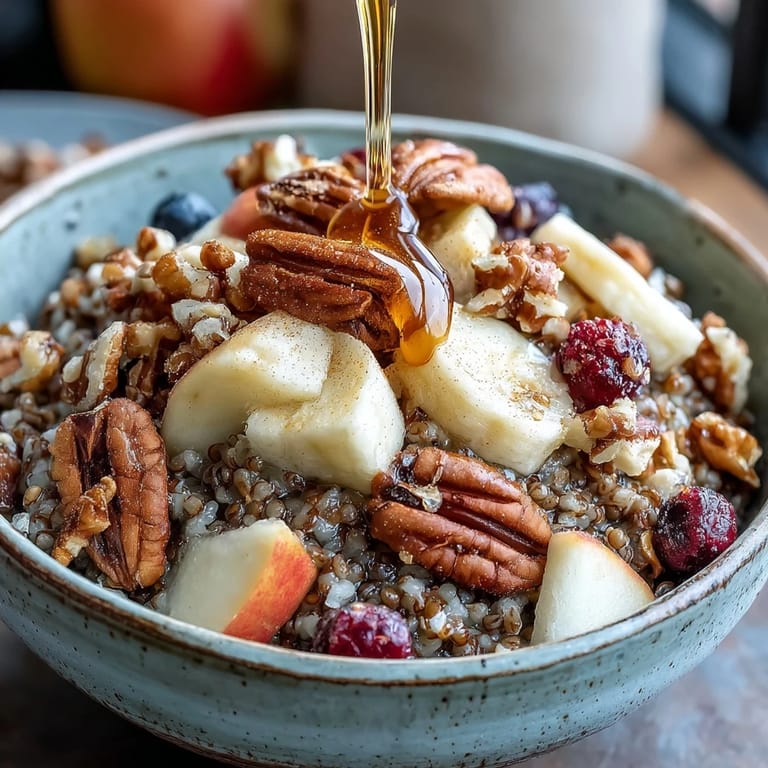
Save There's something almost meditative about cooking buckwheat groats—the way they transform from hard little kernels into something tender and nutty in just fifteen minutes. I discovered this breakfast years ago when a friend brought a bag of them to my kitchen, insisting they were the secret to feeling full until lunch without that mid-morning crash. She was right, and now I can't imagine starting certain mornings any other way.
My partner groaned the first time I served this, skeptical about anything with 'buckwheat' in the name. But after one bite topped with toasted walnuts and fresh raspberries, she asked for seconds and now requests it on weekend mornings. That conversion moment—when someone goes from doubtful to asking for more—never gets old.
Ingredients
- Buckwheat groats (raw, hulled): The foundation of this bowl, with a naturally earthy, slightly nutty flavor that deepens as they cook; they're genuinely gluten-free despite the misleading name.
- Water: Simple, but the ratio matters—too little and you'll end up with crunchy groats, too much and they become mushy.
- Salt: Just a whisper of it brings out the buckwheat's natural nuttiness without making anything taste savory.
- Mixed nuts: Toast them lightly before chopping if you have time; it adds a layer of flavor that raw nuts can't quite match.
- Fresh fruit: The brightness here cuts through the earthiness beautifully, so don't skip it even if you're tempted.
- Honey or maple syrup: Optional, but the sweetness balances perfectly with buckwheat's slightly mineral taste.
- Ground cinnamon: A quarter teaspoon goes a long way, warming everything up without overpowering.
- Milk or plant-based milk: Pour it over warm groats if you like something closer to a porridge consistency, or skip it for a firmer bowl.
Tired of Takeout? 🥡
Get 10 meals you can make faster than delivery arrives. Seriously.
One email. No spam. Unsubscribe anytime.
Instructions
- Rinse the groats thoroughly:
- Hold them in a fine-mesh strainer under cold water, stirring gently with your fingers until the water runs clear. This removes any dust or debris clinging to the kernels.
- Bring water and groats to a boil:
- Combine the groats, water, and salt in a medium saucepan over medium-high heat. You'll hear them start to pop gently once the water reaches a rolling boil, which is oddly satisfying to listen for.
- Simmer until tender:
- Turn the heat down to low, cover the pan, and let it bubble away for ten to twelve minutes. Resist the urge to peek too often; each time you lift the lid, steam escapes and cooking takes longer.
- Rest and fluff:
- Remove from heat and keep the lid on for five minutes to let the groats finish absorbing any remaining liquid. Then fluff everything gently with a fork, breaking up any clumps that formed while cooking.
- Build your bowl:
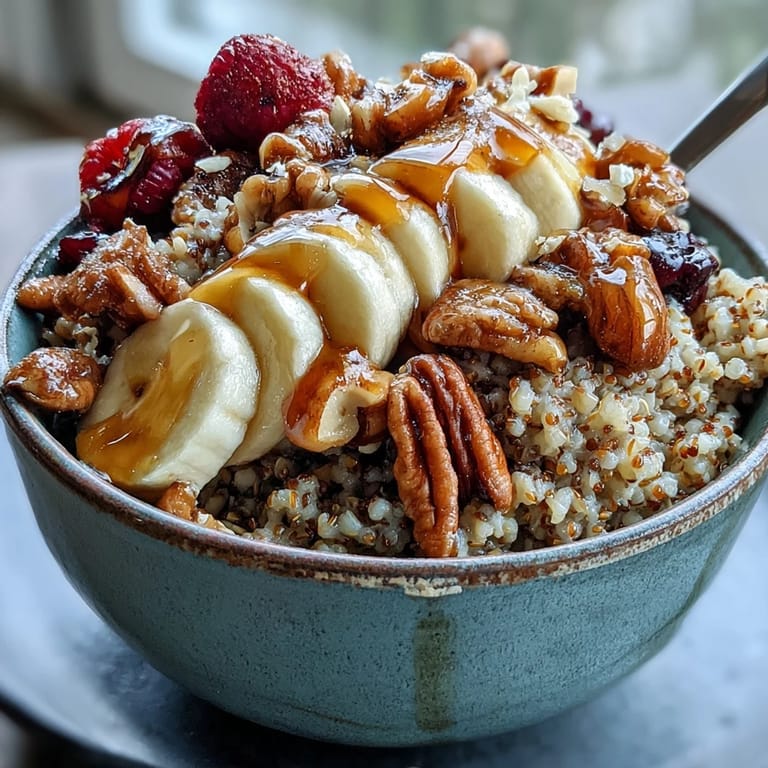
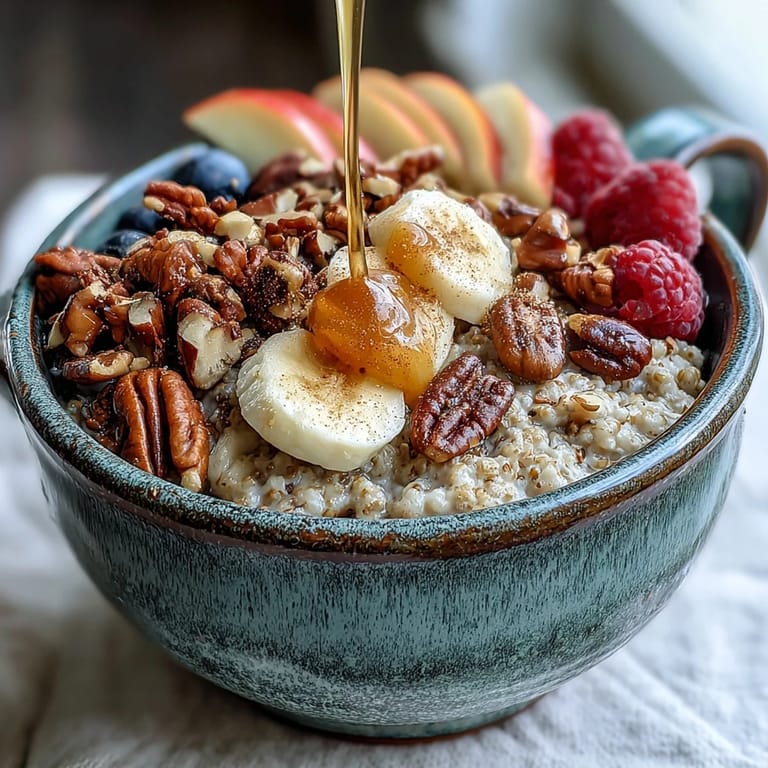
- Divide the warm groats between two bowls, then scatter nuts and fruit across the top. Drizzle with honey or syrup if using, dust with cinnamon, and pour milk over if you prefer a softer texture.
 Save
Save I made this for my mother during a weekend visit, and she surprised me by asking for the recipe, which she rarely does. Watching her eat something I'd prepared with such quiet contentment reminded me that the best meals aren't about complexity—they're about nourishment that feels genuine.
Why Buckwheat Becomes a Regular Habit
Once you realize how buckwheat fills you up without requiring three coffees to make it until lunch, it becomes the breakfast you crave on mornings when you need something grounding. The nutty flavor develops as the groats cook, creating a subtly complex base that never feels boring even when you make it repeatedly.
The Beauty of Customizing Your Toppings
The real magic happens when you stop seeing this as a single recipe and start treating it as a canvas for whatever's in season or calling to you. Summer berries feel completely different from autumn pears, and toasted pecans tell a different story than raw sunflower seeds, so don't hesitate to change things up based on what's available or what sounds good.
Making It Work for Your Dietary Needs
This breakfast naturally accommodates so many eating styles—gluten-free, vegetarian, dairy-free if you choose plant milk—without requiring any complicated substitutions or the feeling that you're compromising on flavor. The nut base provides enough richness and protein that you won't feel like you're missing anything, even if you skip the optional honey.
- Swap nuts for seeds like sunflower or pumpkin if you're managing a tree nut allergy.
- Try roasted buckwheat (kasha) instead of raw groats for a deeper, toastier flavor profile.
- Refrigerate any leftovers and reheat gently the next morning with a splash of milk.
 Save
Save There's something quietly powerful about starting your day with food that actually sustains you, and this bowl does exactly that. Return to it whenever you need a breakfast that feels both nourishing and genuinely enjoyable.
Recipe FAQs
- → Are buckwheat groats naturally gluten-free?
Yes, buckwheat groats are naturally gluten-free despite their name. They're actually seeds from a flowering plant, not wheat, making them perfect for those avoiding gluten.
- → Do I need to soak buckwheat groats before cooking?
No soaking is required. Simply rinse the groats thoroughly under cold water before cooking to remove any debris or bitterness, then simmer directly in water.
- → Can I make this breakfast ahead of time?
Absolutely. Cooked buckwheat keeps well in the refrigerator for 3-4 days. Reheat with a splash of milk or water and add fresh toppings when serving.
- → What's the difference between raw buckwheat and kasha?
Kasha is roasted buckwheat groats with a deeper, toastier flavor and darker color. Raw buckwheat has a milder taste. Both work in this breakfast dish.
- → How do I know when buckwheat is fully cooked?
The groats are done when they're tender but still retain a slight chew, similar to al dente pasta. Most water should be absorbed after 10-12 minutes of simmering.