 Save
Save There's something about the smell of ginger hitting hot broth that makes everything feel deliberate and slow, like the kitchen itself is exhaling. I stumbled onto this soup during a particularly gray January when my usual go-to comfort foods felt too heavy, too much. A friend mentioned she'd been sipping something light but deeply warming every afternoon, and when she described that whisper of miso and the way fresh ginger seemed to wake up her whole body, I knew I had to try it. What started as curiosity turned into a ritual—this became my four o'clock remedy when the day felt like it was dragging.
I made this for my mother the winter she wasn't feeling like herself, and watching her close her eyes after that first spoonful told me everything I needed to know. She asked for it three days in a row, each time with slightly different vegetables because we were just using what was in the crisper drawer. By the fourth day, I realized the soup wasn't the point—it was the excuse to sit together and let something warm and gentle do the talking for us.
Ingredients
- Vegetable broth (6 cups): The foundation everything else floats on, so choose one you actually like drinking on its own—low-sodium lets the ginger and miso shine without getting buried.
- Fresh ginger (2-inch piece): Slice it thin so it releases its warmth gradually into the broth; thicker pieces feel lazy and one-note by comparison.
- Garlic (2 cloves): Thin slices matter here because you want flavor distributed, not garlic chunks that surprise you.
- White or yellow miso paste (2 tablespoons): This is where the magic lives—umami and subtle fermentation that makes people ask what that flavor is they can't quite name.
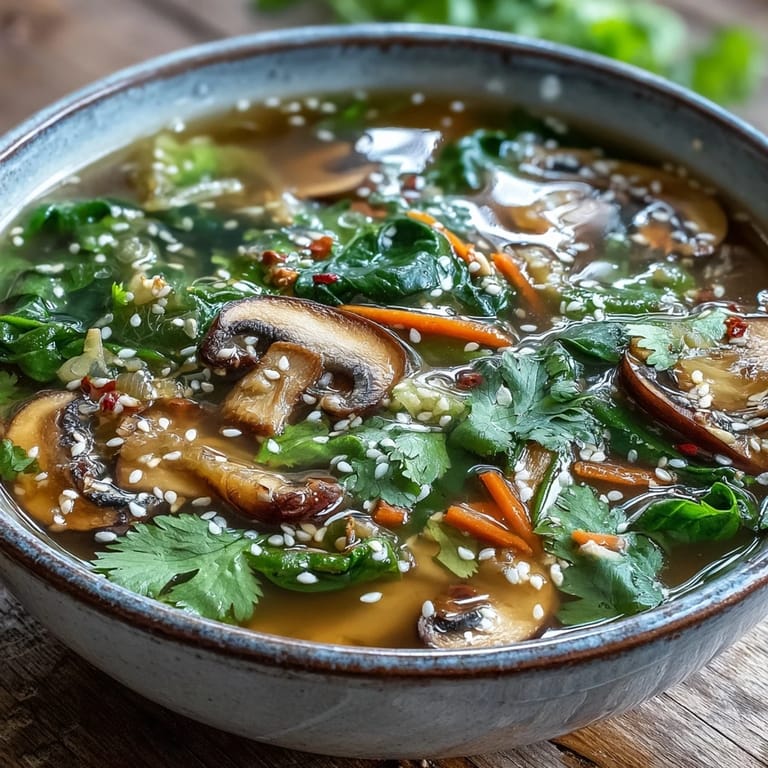
- Shiitake mushrooms (1 cup): They bring earthiness and substance without pretending to be something they're not; if you can only find button mushrooms, they'll work but you'll taste the difference.
- Baby spinach or bok choy (1 cup): Choose based on mood—spinach dissolves into the broth like a whisper, bok choy holds its shape and adds a gentle crunch.
- Carrot (1 medium): Julienned means it cooks in seconds and adds a hint of natural sweetness that balances the salty-umami notes.
- Green onions (2): These finish the job, adding fresh brightness right at the end when everything else is warm and settled.
- Toasted sesame seeds: The garnish that transforms the whole thing from simple to intentional.
- Cilantro and chili oil (optional): For when you want to push it toward brightness or heat; neither is required but both change the conversation.
Tired of Takeout? 🥡
Get 10 meals you can make faster than delivery arrives. Seriously.
One email. No spam. Unsubscribe anytime.
Instructions
- Build your fragrant base:
- Pour the vegetable broth into your largest saucepan and bring it to a gentle simmer—you want small bubbles breaking the surface, not an aggressive boil. The moment you smell that broth warming, you know you're on the right track.
- Infuse with ginger and garlic:
- Add your thinly sliced ginger and garlic to the simmering broth and let them have ten minutes to soften and perfume everything. This is when your kitchen starts smelling like something real is happening.
- Add the vegetables that need time:
- Stir in the mushrooms and julienned carrot, then give them five minutes to cook through until they're tender but not mushy. You'll notice the broth darkening slightly from the mushroom essence.
- The miso moment (don't skip this):
- This step separates good soup from great soup—ladle some of that hot broth into a small bowl, add your miso paste, and whisk it smooth before it goes back into the pot. This keeps the probiotics alive and the flavor bright instead of cooked away.
- Bring everything together gently:
- Reduce the heat to low, stir your miso mixture back into the pot slowly, and resist every urge to let it boil. The moment you taste the finished soup and it tastes right is when you know you've honored the ingredients.
- Finish with the quick-cooking greens:
- Add your spinach or bok choy and green onions, stir for about one minute until they wilt into the warm broth. This is why you cook at the very end—they should arrive tender but still themselves, not defeated.
- Taste and adjust:
- This is your moment to make it yours—a little more miso for deeper umami, a splash of soy sauce if it needs salt, or a squeeze of lime if you want brightness.
- Serve with intention:
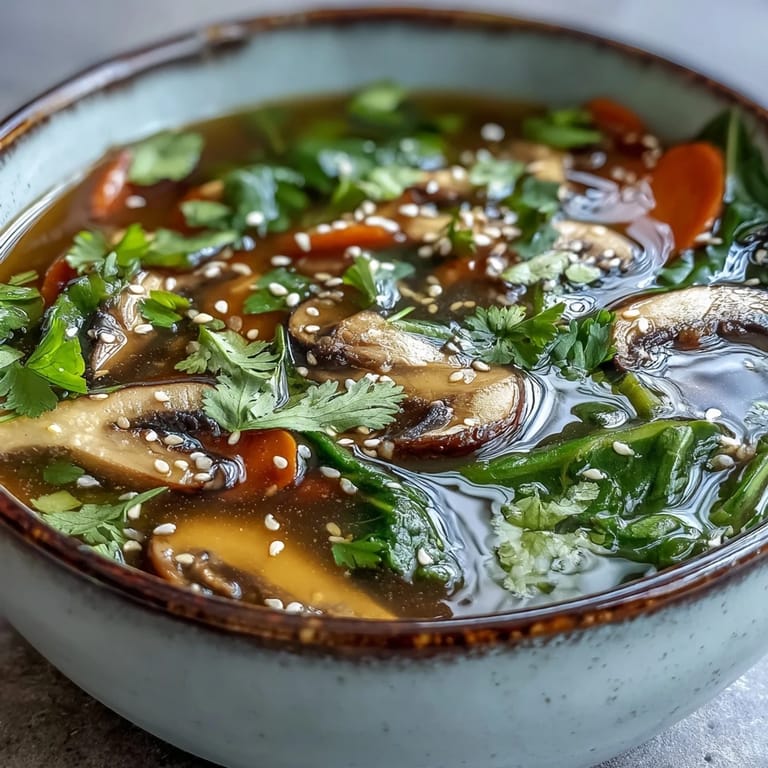
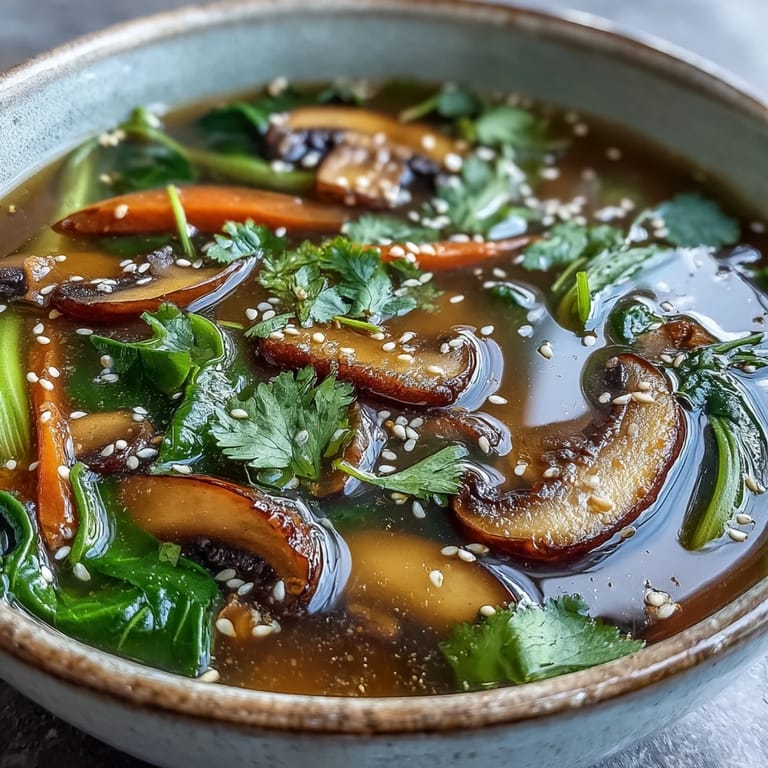
- Ladle into bowls and crown each one with sesame seeds, cilantro if you're using it, and a drizzle of chili oil if heat appeals to you. The garnish isn't decoration; it's part of the experience.
 Save
Save This soup became something I made for myself on mornings when everything felt uncertain, and somehow ladling it into a bowl made the day feel manageable again. It's not fancy or complicated, which is exactly why it works—there's honesty in something this simple that tastes this good.
When Simple Ingredients Become Medicine
The philosophy behind this soup isn't about complexity; it's about letting each ingredient do exactly what it does best without interference. Ginger warms, miso nourishes, vegetables provide substance, and together they create something greater than the sum of their parts. I've learned that the best recipes often feel like they've always existed, like you're just remembering them rather than inventing them.
Customizing Without Losing the Soul
The beauty of this soup is that it doesn't need you to follow it exactly to work—it invites variation in the way good soup does. Some days I add silken tofu for protein and a subtle creaminess that changes the texture without taking over. Other times I use red miso instead of white, which deepens everything and makes it feel heavier, more substantial, like you're cooking for someone who needs real comfort.
Building Layers of Flavor
What makes this soup sing is the respect for timing and technique—every ingredient enters the pot when it's ready to contribute, not before. The ginger and garlic need time to soften and release their warmth; rushing them means you get harsh edges instead of rounded comfort. The greens go in last so they arrive fresh; the miso goes in gently so its magic survives; the whole thing comes together like a conversation rather than a monologue.
- If you're adding noodles, cook them separately so they don't absorb all the broth and leave the bowl dry.
- Save a little broth if you're making it ahead—reheating can thicken it more than you expect.
- Taste as you go because miso varies by brand, and what tastes perfect in one pot might need adjustment in the next.
 Save
Save This soup taught me that nourishment doesn't need to be complicated to be real. Make it when you need it, the way you need it, and trust that simplicity done well is exactly what healing tastes like.
Recipe FAQs
- → Can I use different types of miso paste?
Yes, you can use white, yellow, or red miso paste. White miso offers a milder, slightly sweet flavor, while red miso provides a deeper, more robust taste. Choose based on your flavor preference.
- → Why shouldn't I boil the soup after adding miso?
Boiling miso paste destroys the beneficial probiotics and can make the flavor bitter. Always add miso to warm broth off high heat and stir gently to preserve its health benefits and delicate flavor.
- → What vegetables can I substitute?
You can easily substitute bok choy for spinach, use kale instead of leafy greens, or add different mushroom varieties. Root vegetables like daikon radish or snap peas also work wonderfully in this soup.
- → How do I make this soup more filling?
Add cubed silken or firm tofu for protein, or include cooked soba or udon noodles. You can also add edamame or increase the quantity of mushrooms and vegetables for a heartier meal.
- → Can I prepare this soup ahead of time?
The broth can be prepared in advance and stored in the refrigerator for up to 3 days. However, add the miso paste and fresh greens just before serving to maintain the best flavor and texture.
- → Is this soup gluten-free?
It depends on your miso paste and vegetable broth. Many miso pastes contain wheat, so check labels carefully. Look for certified gluten-free miso and broth if you need to avoid gluten completely.