 Save
Save The smell hit me before I even walked into the kitchen. Sharp, grassy Pecorino and toasted pepper mingling in steam. My neighbor, an older Roman woman who spoke more with her hands than words, was stirring a pot of something that looked deceptively plain but smelled like every trattoria I'd ever dreamed of visiting. She handed me a fork, and I understood immediately why three ingredients could make grown adults weep with joy.
I made this for my brother once after he'd had a terrible week. He sat at my kitchen counter, silent and exhausted, twirling pasta and chewing slowly. Halfway through the bowl he looked up and said, this is exactly what I needed. It wasnt just the food. It was the warmth, the salt, the way something so simple could feel like care made edible.
Ingredients
- Spaghetti (400 g): The long strands grab the sauce beautifully, and their starch is what makes everything creamy, so save that pasta water like your life depends on it.
- Pecorino Romano cheese (120 g, finely grated): This is the star, salty and funky and sharp, and it must be freshly grated or it will seize into clumps instead of melting into silk.
- Freshly cracked black pepper (2 tsp, plus extra): Toasting it wakes up oils you didnt know were there, turning simple pepper into something bold and almost floral.
- Salt: For the pasta water, which should taste like the sea, because underseasoned pasta will ruin even the best sauce.
Tired of Takeout? 🥡
Get 10 meals you can make faster than delivery arrives. Seriously.
One email. No spam. Unsubscribe anytime.
Instructions
- Boil the Pasta:
- Bring a large pot of heavily salted water to a rolling boil, drop in the spaghetti, and cook until just al dente with a slight bite in the center. Before draining, scoop out at least one full cup of that cloudy, starchy water, it's your secret weapon for creaminess.
- Toast the Pepper:
- While the pasta cooks, add the black pepper to a large dry skillet over low heat and let it toast for a minute or two until it smells warm and fragrant, like it just woke up. Don't rush this, the flavor deepens beautifully.
- Build the Base:
- Pour about half a cup of the hot reserved pasta water into the skillet with the toasted pepper and let it bubble gently. This creates a peppery broth that will coat every strand.
- Toss the Pasta:
- Add the drained spaghetti directly into the skillet and toss it around with tongs, letting it drink up that peppery water. The pasta should glisten and start to cling together slightly.
- Add the Cheese:
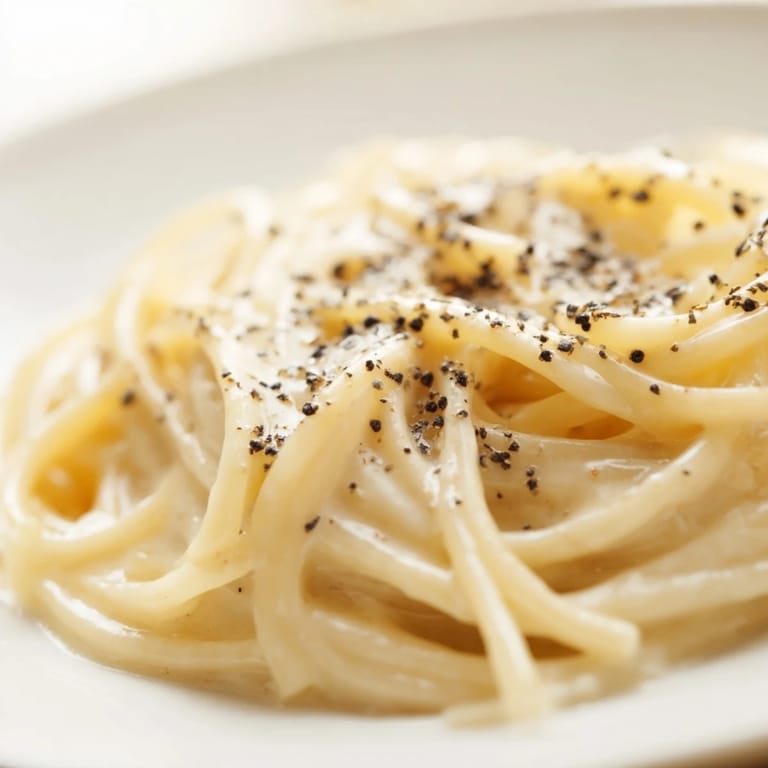
- Turn the heat to the lowest setting, then sprinkle in the grated Pecorino a handful at a time, tossing constantly and vigorously like you mean it. Add splashes of reserved pasta water as you go, the starch and fat will emulsify into a glossy, creamy sauce that clings to every strand.
- Serve Immediately:
- Divide the pasta into warm bowls, top with extra grated Pecorino and a generous crack of black pepper. Eat it fast while it's hot and creamy, because it waits for no one.
 Save
Save There was a night I served this to friends who claimed they didn't like simple food. They wanted complexity, layers, drama. But after the first bite, the table went quiet, forks scraping bowls, and someone finally said, okay, I get it now. Sometimes three ingredients done right will always win.
Choosing Your Cheese
Pecorino Romano is traditional and irreplaceable if you want the real sharp, salty punch of Rome. But Parmigiano Reggiano works beautifully if you prefer something milder and nuttier, or mix half and half for a rounder flavor. Just make sure whatever you use is freshly grated from a block, the pre-shredded stuff will betray you every single time.
Getting the Texture Right
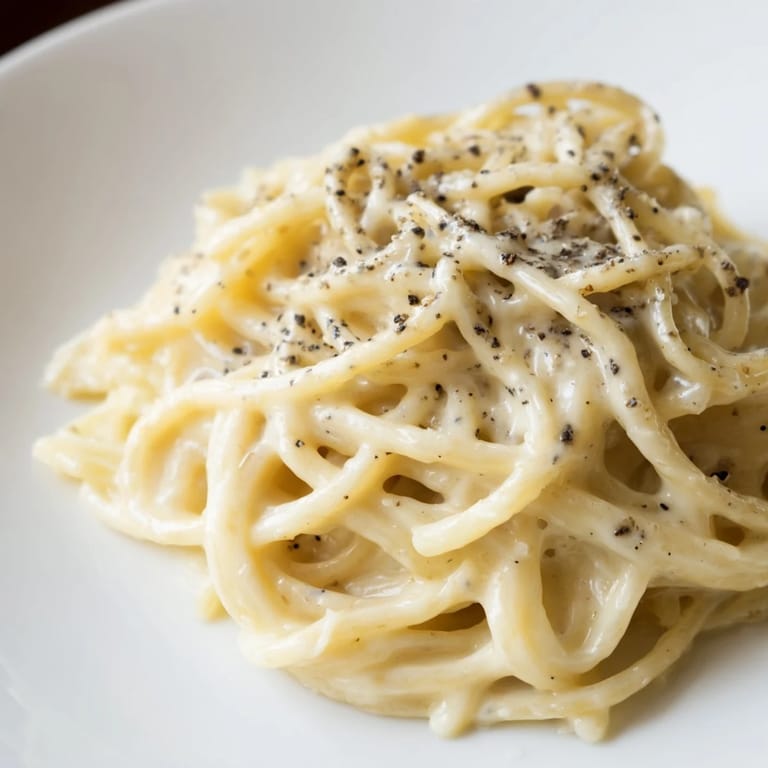
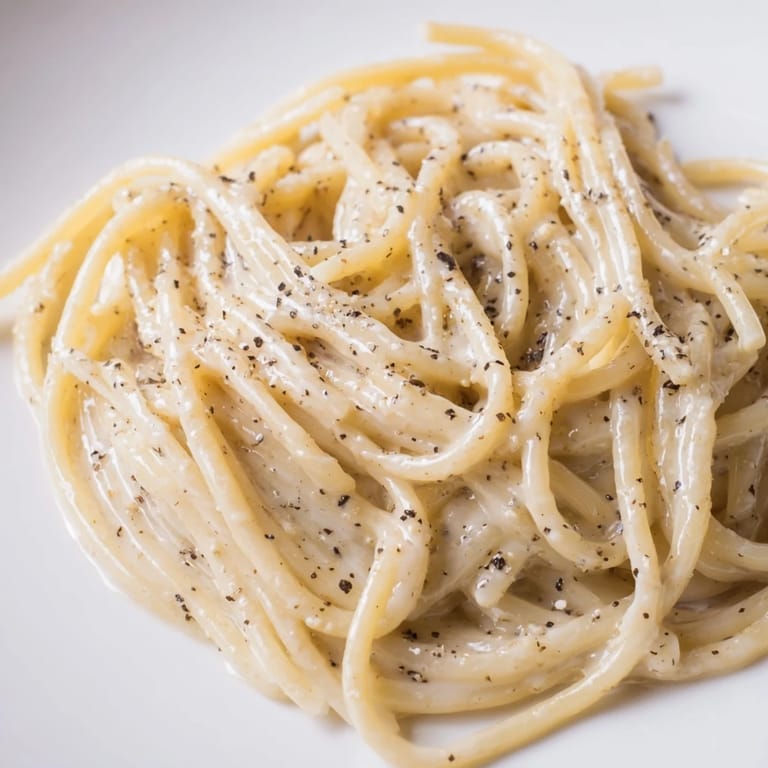
The sauce should cling to the pasta like silk, not puddle at the bottom of the bowl or look dry and broken. If it's too thick, add pasta water a tablespoon at a time while tossing. If it's too loose, let it sit off heat for thirty seconds, the residual heat will tighten it up as the cheese continues to melt and bind.
Serving and Pairing
This dish is best eaten immediately, straight from the pan if you're feeling bold, because it loses its creamy magic as it cools. Pair it with a crisp white wine like Vermentino or Pinot Grigio to cut through the richness, or just a cold glass of sparkling water with lemon if you want to keep it simple.
- Serve in warmed bowls so the pasta stays hot longer and the sauce doesn't seize.
- A light arugula salad with lemon on the side balances the richness perfectly.
- Leftovers can be gently reheated with a splash of water in a skillet, though it will never be quite as good as the first time.
 Save
Save This recipe taught me that cooking isn't always about doing more, sometimes it's about doing less but doing it with intention and respect for every single ingredient. That's the kind of lesson that sticks with you long after the plates are clean.
Recipe FAQs
- → Why is my Cacio e Pepe sauce clumpy instead of creamy?
Clumping occurs when cheese is added too quickly or the skillet is too hot. Add cheese gradually while stirring vigorously and maintain low to medium heat. The starch in the pasta water helps emulsify the cheese into a smooth sauce. Work quickly but carefully for best results.
- → Can I use Parmigiano Reggiano instead of Pecorino Romano?
Yes, Parmigiano Reggiano is an excellent substitute, though it will produce a milder, less salty flavor. Pecorino Romano has a sharper, more assertive taste that defines the traditional dish. You may need to adjust salt levels when substituting.
- → How important is freshly cracked black pepper?
Freshly cracked pepper is essential for authentic Cacio e Pepe. Pre-ground pepper loses its aromatic oils and won't provide the same vibrant, peppery flavor. Toasting the freshly cracked pepper briefly also enhances its natural fragrance.
- → What's the best way to reserve pasta cooking water?
Before draining your spaghetti, use a measuring cup or ladle to collect at least one cup of the starchy cooking water. This water is crucial for creating the emulsified sauce, as the starch helps bind the cheese and creates that silky texture.
- → How do I know when the spaghetti is al dente?
Al dente pasta should have a slight firmness when bitten, with no chalky center but still offering gentle resistance. Begin testing the spaghetti a minute before the package suggests. It continues to cook slightly in the warm skillet, so remove it just before it reaches your ideal texture.
- → What wine pairs best with this dish?
Crisp white wines complement Cacio e Pepe beautifully. Vermentino and Pinot Grigio are traditional pairings that cut through the richness of the cheese and pepper while enhancing the dish's subtle flavors. Other light, acidic whites work well too.