 Save
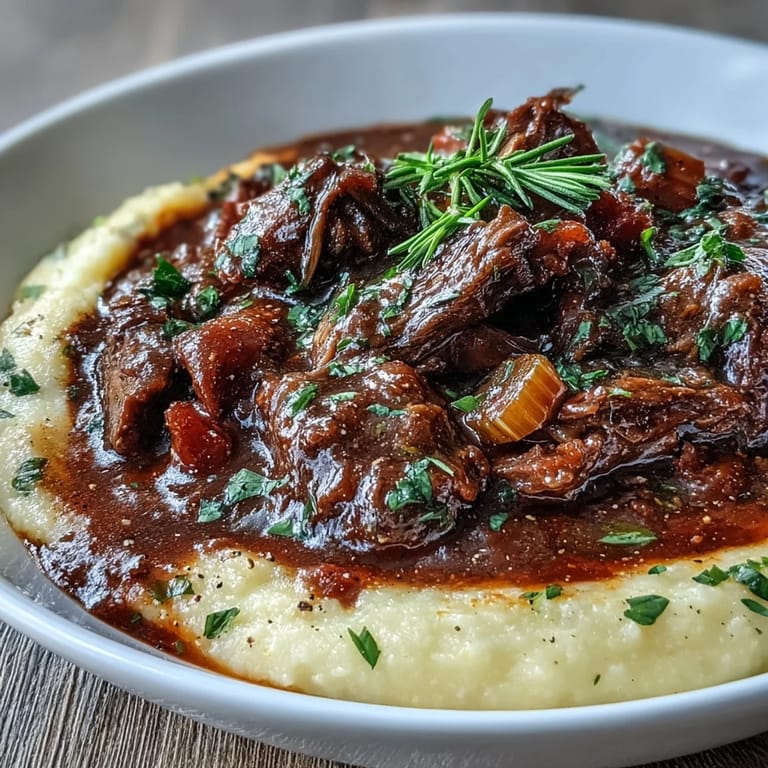
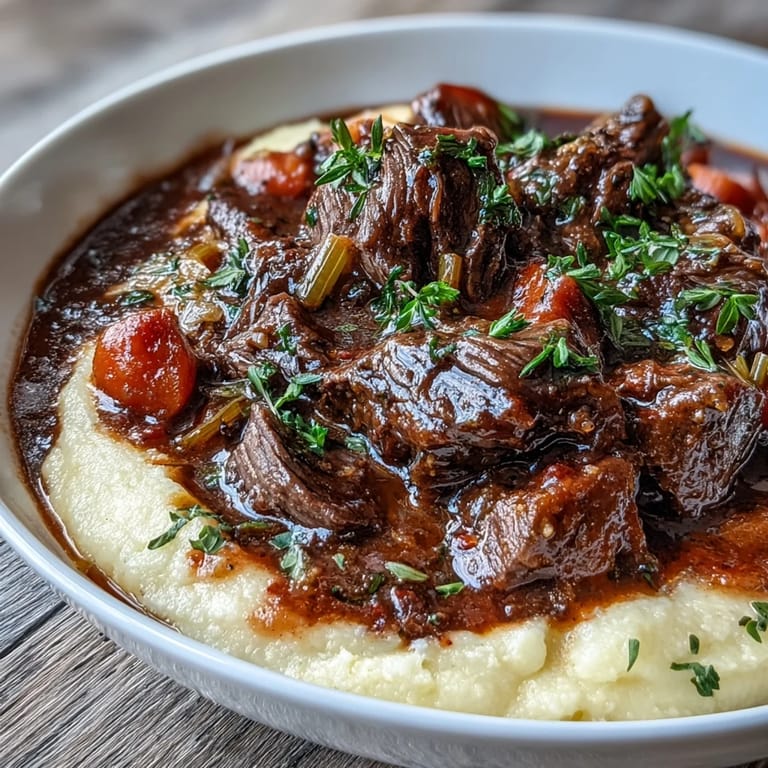
Save The venison came from a friend's freezer, wrapped in frost and butcher paper, with instructions to treat it gently. I'd never cooked game before, and the small bottle of homemade sloe gin sitting on my counter felt like the right kind of risk. The kitchen smelled like juniper and wine-dark fruit as the stew bubbled low on the stove, filling the house with something both wild and warm. By the time I spooned it over polenta, I understood why people hunt in winter and cook all afternoon.
I made this the first time for a dinner party in January, when everyone was tired of festive food but still craving comfort. The polenta turned out silkier than I expected, and the venison fell apart under a spoon. One guest, a skeptic of game meat, went quiet after the first bite, then asked for seconds. It became the kind of meal people remember when they talk about winter dinners.
Ingredients
- 800 g venison shoulder or stewing venison, cut into 3 cm cubes: Venison is leaner than beef, so the slow braise is essential to break down the fibers and keep it tender without drying out.
- 2 tbsp olive oil: Use this to get a deep sear on the meat, which builds the base flavor for the entire stew.
- 1 large onion, finely chopped: The onion softens into sweetness and thickens the sauce as it cooks down.
- 2 carrots, sliced: Carrots add natural sweetness and a bit of body to the broth.
- 2 celery stalks, diced: Celery brings a subtle earthiness that balances the richness of the venison.
- 2 garlic cloves, minced: Fresh garlic deepens the savory backbone without overpowering the delicate gin.
- 2 tbsp tomato paste: This concentrates umami and gives the sauce a velvety texture.
- 150 ml sloe gin: The botanical and berry notes are what make this stew special, adding complexity you won't get from wine alone.
- 400 ml beef or game stock: Use the best stock you can find or make, it's the liquid foundation of everything.
- 1 tbsp redcurrant jelly: A small spoon of this balances acidity and sweetness, rounding out the sauce beautifully.
- 2 bay leaves: These add a gentle herbal note that deepens as the stew simmers.
- 2 sprigs fresh thyme: Thyme loves game meat and brings a warm, woodsy flavor.
- 1 tsp juniper berries, lightly crushed: Juniper echoes the gin and ties the whole dish to its wild origins.
- Salt and freshly ground black pepper, to taste: Season boldly, venison can handle it.
- 750 ml whole milk: Whole milk makes the polenta creamy and rich without feeling heavy.
- 250 ml water: This thins the milk just enough to keep the polenta from scorching.
- 150 g polenta: Quick-cooking polenta works fine, but traditional polenta has more texture and flavor if you have the time.
- 40 g unsalted butter: Butter gives the polenta a silky finish and a little indulgence.
- 50 g grated Parmesan cheese: Parmesan adds salt and umami, making the polenta taste complete.
Tired of Takeout? 🥡
Get 10 meals you can make faster than delivery arrives. Seriously.
One email. No spam. Unsubscribe anytime.
Instructions
- Sear the venison:
- Heat the olive oil in a large, heavy-based casserole over medium-high heat. Brown the venison cubes in batches, making sure each piece gets a deep golden crust before setting them aside.
- Soften the vegetables:
- In the same pan, add the onion, carrots, and celery. Cook for 5 to 7 minutes until softened, then stir in the garlic and tomato paste, cooking for another minute until fragrant.
- Deglaze with sloe gin:
- Return the venison to the pan. Pour in the sloe gin and let it bubble for 2 minutes to reduce slightly, scraping up any browned bits from the bottom.
- Build the stew:
- Add the stock, redcurrant jelly, bay leaves, thyme, and juniper berries. Season with salt and pepper, then bring to a simmer.
- Slow-cook the venison:
- Cover and cook gently on low heat for 2 hours, stirring occasionally, until the venison is very tender and the sauce has thickened.
- Start the polenta:
- While the stew is cooking, heat the milk and water in a saucepan until just simmering. Gradually whisk in the polenta to avoid lumps.
- Finish the polenta:
- Cook over low heat, stirring constantly, for 5 to 10 minutes until thick and creamy. Stir in the butter and Parmesan, then season to taste with salt.
- Serve:
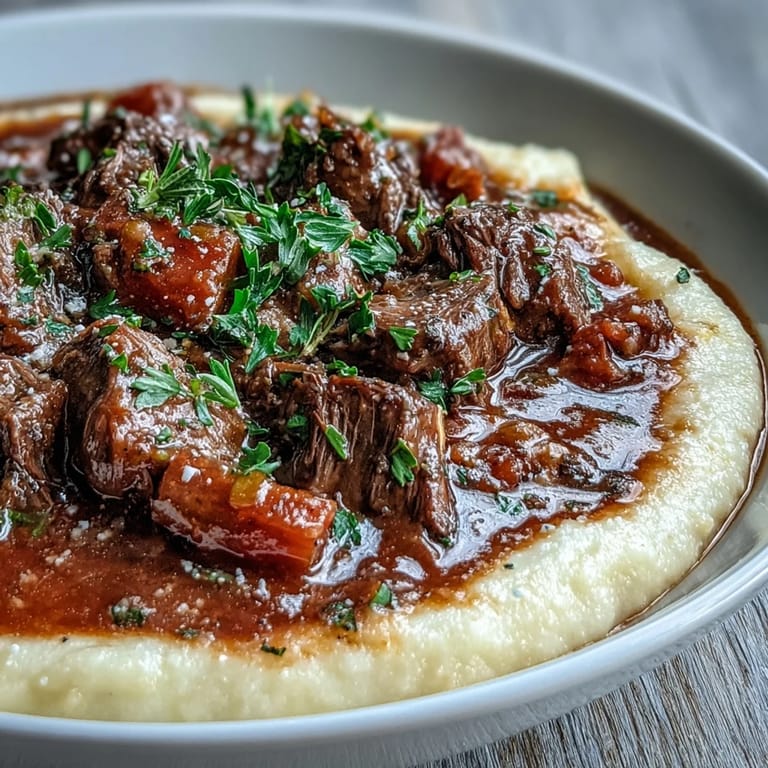
- Remove bay leaves and thyme sprigs from the stew. Serve the venison stew hot over creamy polenta, spooning the sauce generously over each portion.
 Save
Save The second time I made this, I served it to my parents on a cold Sunday afternoon. My dad, who usually prefers plain roasts, scraped his bowl clean and asked if I had more polenta. My mum said it reminded her of something she'd eaten in the Alps years ago, though she couldn't remember where. That's when I realized this dish had become more than just dinner, it was a feeling.
Choosing Your Venison
Venison shoulder is ideal for stewing because it has enough connective tissue to break down into tenderness without drying out. If you can only find loin or steaks, save those for quick cooking and ask your butcher for stewing cuts or trim. Frozen venison works perfectly well, just make sure it's fully thawed and patted dry before browning. The key is low, slow heat, venison is lean and will toughen if rushed.
About Sloe Gin
Sloe gin is a British liqueur made by steeping sloe berries in gin and sugar, and it has a tart, fruity, slightly bitter flavor that works beautifully with game. If you don't have it, a good port or a berry liqueur like cassis will work, though the flavor will shift slightly. I've also used a splash of red wine with a teaspoon of sugar and a few crushed juniper berries to mimic the effect. The goal is to add fruity depth without overwhelming the meat.
Storing and Reheating
This stew tastes even better the next day, after the flavors have had time to settle and deepen. Store it in an airtight container in the fridge for up to three days, or freeze it for up to three months. Reheat gently on the stovetop, adding a splash of stock if it's thickened too much. Make fresh polenta when you're ready to serve, it doesn't reheat as well and can turn gluey.
- Freeze the stew in individual portions for easy weeknight dinners.
- Garnish with fresh parsley or a few extra juniper berries for a pretty finish.
- Pair with a robust red wine like Shiraz or Cabernet Sauvignon to match the richness.
 Save
Save This is the kind of dish that makes winter feel intentional, not something to endure but something to savor. Serve it to people you want to feed well, and let the house smell like juniper and slow time.
Recipe FAQs
- → Can I substitute the venison with another meat?
Yes, you can use beef chuck, lamb shoulder, or wild boar as alternatives. Adjust cooking time as needed, though most stewing cuts require similar braising times for tenderness.
- → What can I use instead of sloe gin?
Port, red wine, or berry liqueurs like cassis work well as substitutes. Each brings a different flavor profile, but all complement the rich venison beautifully.
- → Can I make this stew ahead of time?
Absolutely. The stew actually improves when made a day ahead, allowing flavors to deepen. Reheat gently and prepare fresh polenta just before serving.
- → How do I know when the venison is tender enough?
The meat should easily break apart with a fork and feel melt-in-your-mouth soft. If still tough after 2 hours, continue cooking in 30-minute increments until tender.
- → Can I use instant polenta instead of regular?
Yes, quick-cooking polenta works perfectly and saves time. Follow package instructions for liquid ratios, then finish with butter and Parmesan as directed.
- → What wine pairs best with this dish?
Full-bodied reds like Shiraz, Cabernet Sauvignon, or a robust Côtes du Rhône complement the rich venison and sloe gin flavors beautifully.